
Chengran (Felix) Guan
2026-08-06 · 9 min read
AI Photo Disclosure Rules 2026:
What Real Estate Photographers Must Know
Yes. If you deliver listing photos that have been digitally altered — virtually staged, decluttered, or sky-replaced — your agent client now has a legal obligation to disclose that, and you have a practical obligation to make compliance easy. California's Assembly Bill 723 (AB 723) took effect January 1, 2026, and it is the clearest signal yet that AI-edited listing media has moved from “nice to disclose” to “must disclose.” The core rule is simple: any image that changes what the property actually looks like must be labeled as altered, and the original unaltered photo must be available on request.
This guide is written for the people who actually produce the media: real estate photographers, videographers, and media companies. The law regulates licensed agents, but you are the compliance linchpin. If you ship altered images without originals or labels, you are putting every agent client of yours at risk — and, increasingly, yourself. Here is what changed, what counts as “altered,” and exactly how to build disclosure into your delivery workflow.
Key Takeaways
- AB 723 is live. Since January 1, 2026, California requires agents to conspicuously disclose digitally altered listing images and provide original, unaltered photos on request.
- “Altered” means changed substance: virtual staging, furniture swaps, declutter, object removal, and sky replacement. Basic edits like exposure, color correction, cropping, and straightening are exempt.
- This is not just California. NAR's Code of Ethics Article 12 already requires a “true picture” in marketing nationwide, and most MLS boards require disclosure of virtually staged photos.
- Photographers are the linchpin. Deliver originals alongside edited files, label every altered image, and add disclosure language to your contract so your agent clients can comply without chasing you.
- When in doubt, disclose. Boards and buyers increasingly treat undisclosed alterations as misrepresentation — the safe path is to label anything that isn't a basic correction.
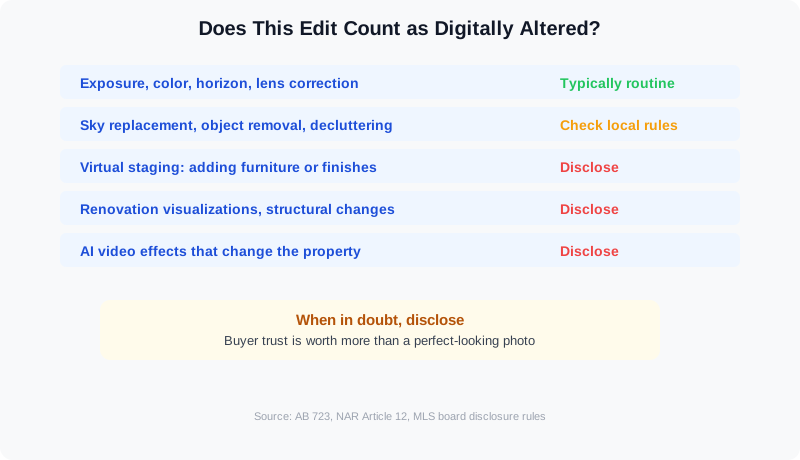
The disclosure question starts at the edit: does this change what the property actually looks like?
What Counts as a “Digitally Altered” Photo?
The term “digitally altered image” has a precise legal definition now, and it matters for every edit you make. Under the text of AB 723, an image is digitally altered when edits change the representation of the real property. The bill explicitly excludes “only lighting, sharpening, white balance, color correction, angle, straightening, cropping, exposure, or other common photo editing adjustments” — as long as those adjustments do not change what the property looks like.
That line — does it change the representation of the property? — is the entire test. In practice, the edits that trigger disclosure are the ones buyers would care about: anything that adds, removes, or moves something in the frame. Basic corrections that a buyer would expect any photographer to make are exempt. The San Diego MLS summarizes it the same way: brightness, exposure, color correction, cropping, straightening, sharpening, and noise reduction do not count as alterations.
| Edit type | Counts as altered? | Disclosure needed? |
|---|---|---|
| Brightness / exposure | No | No |
| Color correction / white balance | No | No |
| Cropping / straightening | No | No |
| Virtual staging (furniture added) | Yes | Yes |
| Declutter / object removal | Yes | Yes |
| Sky replacement | Yes | Yes |
| Renovation visualization | Yes | Yes |
A useful rule of thumb for your editing desk: if a buyer comparing the edited photo to the house as it actually stands would notice a difference in the property itself — furniture, finishes, outdoor scene, missing objects — it is altered. If the difference is only in the quality of the photograph, it is not.
California's AB 723, Explained
AB 723 requires any real estate broker or salesperson who includes a digitally altered image in an advertisement or promotional material to include a conspicuous disclosure, and to provide the original, unaltered photo on request. The law took effect January 1, 2026, and the state's largest MLS boards have already aligned their rules with it. Pasadena-Foothills REALTORS® reports that CRMLS updated its rules to match AB 723's definitions: altered photos must be labeled as digitally altered or virtually staged, the original photo must appear immediately before or after the altered one in the listing view, and when in doubt, the safest path is to disclose.
For a photographer, the practical takeaway is concrete: your agent clients in California now need two versions of every altered image — the final edited file and the untouched original — plus a clear label identifying which photos were altered. MLSListings' AB 723 overview walks through the same requirements for agents: disclose, label, and keep originals accessible. The more of that you build into your delivery package, the easier your clients' compliance becomes — and the more valuable your service is.
NAR Article 12 and MLS Rules Across the Country
Do not file this away as a California-only issue. The National Association of REALTORS® Code of Ethics, Article 12 has required members to “present a true picture” in advertising and marketing for decades. That standard applies to listing photos everywhere, and it is why most MLS boards now have explicit virtual staging disclosure rules. As compliance guides for 2026 note, Article 12 is the governing standard: REALTORS® must be honest and truthful, and present a true picture in all representations.
The board-level rules vary but cluster around a few consistent requirements: label virtually staged or altered photos, disclose in the listing remarks, never use editing to hide defects or change structural elements, and keep the unaltered originals available. Some boards go further — for example, prohibiting AI-generated outdoor scenes that never existed on the property. The pattern is the same everywhere: virtual staging and AI enhancement are allowed, but only when disclosed. If you work across multiple markets, check each board's rules; the disclosure mechanics differ, but the obligation does not.
What This Means for Your Photography Workflow
The law sits on the agent, but the workflow sits on you. Your editing pipeline now has three deliverables where it used to have one: the edited image, the original, and the label. That sounds like overhead, but it is also a differentiator — the photographer who hands an agent a disclosure-ready package is the one who keeps the account.
- Archive originals by default. Keep the untouched camera file for every image you alter. Store them per-listing so you can produce them instantly when an agent or board asks.
- Label altered images in the delivery. A simple “Virtually staged” or “Digitally altered” marker in the filename, folder, or gallery makes compliance one click for your client.
- Add disclosure language to your contract. State that altered images are provided with originals, and that the agent is responsible for board disclosure. This protects you and educates the client.
- Pair edited and original in your gallery. If your delivery platform supports it, place the original immediately before or after the altered image — mirroring what boards like CRMLS now require.
- Never alter structural elements or hide defects. This is the hard line in every rule set. Remove a dirty dish, not a foundation crack.
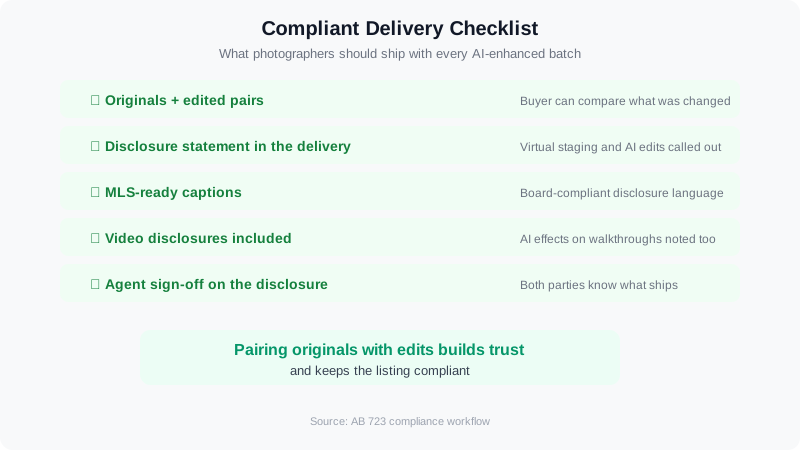
A disclosure-ready delivery includes the edited file, the original, and a clear label.
None of this slows you down if your tools support it. The right AI editing platform makes the altered image in minutes and keeps the original untouched in the same project — which is exactly how media work should function in a compliance era.
A Compliance Workflow for Your Next Delivery
Turn the rules into a repeatable checklist. Here is a five-step workflow you can run on every listing that involves virtual staging, declutter, sky replacement, or renovation visualization:
- Sort the shoot. Flag every image you plan to alter before you start editing. Keep the original set untouched in a separate folder named for the listing.
- Edit with intent. Apply only the changes that serve the listing — staging a vacant living room, removing clutter, replacing an overcast sky. Skip anything that touches structure or conceals condition.
- Label as you export. Name altered files with a clear marker (for example,
living-room-staged.jpg) and export the matching original with it. - Package both versions. Deliver a folder or gallery where each altered image sits next to its original, and add a one-line note in the listing remarks template: “Photos have been digitally altered or virtually staged; originals available on request.”
- Confirm with the agent. One sentence in your delivery message: “Staged and altered images are labeled, and originals are included for disclosure.” That single line makes you the easy part of their compliance.
Video and Virtual Staging: The Same Rules Apply
The disclosure logic extends beyond stills. AI video effects, renovation before-and-after visuals, and automated walkthroughs that insert furniture or change finishes all alter the representation of the property — and truth-in-advertising principles apply to video just as they do to photos. If your video shows a property with finishes or furnishings it does not actually have, that is a disclosure event, not a creative flourish.
AI effects can transform a walkthrough in minutes — and should be disclosed just like staged photos.
The good news: compliance and efficiency are not in conflict. Platforms built for real estate media handle both sides of the line. VideoGuru, for example, is an AI real estate media platform covering both photo and video — one-click virtual staging, declutter, and furniture swaps for stills, plus a full video editing suite that turns listing photos into walkthroughs. Because the originals stay in the same project, producing the disclosure-ready pair is part of the workflow, not an extra step. If you already use AI photo editing for real estate, you can build the same compliance discipline into your renovation visualization and video work.
Frequently Asked Questions
Do I have to disclose virtually staged photos in listing images?
Yes. California's AB 723 requires disclosure of digitally altered listing images, and most MLS boards nationwide require the same for virtually staged photos. The common standard: label the photo as staged or altered, and make the original unaltered version available. If you are unsure whether a board treats an edit as an alteration, disclose it — that is the safe path boards themselves recommend.
Does AB 723 apply to basic edits like brightness and color correction?
No. The law explicitly exempts lighting, sharpening, white balance, color correction, angle, straightening, cropping, exposure, and other common adjustments — as long as they do not change the representation of the property. The dividing line is substance: quality corrections are exempt, changes to what the property looks like are not.
Who is responsible for disclosure — the photographer or the agent?
Legally, the licensed agent or broker who publishes the listing bears the disclosure obligation. Practically, photographers are the compliance linchpin: they produce the altered images, hold the originals, and control how files are delivered. The professional move is to make compliance effortless for the agent by delivering labeled edits with matching originals and disclosure-ready packaging — and to note the agent's responsibility in your contract.
Is virtual staging still allowed on the MLS in 2026?
Yes — with disclosure. Virtual staging is permitted on virtually every MLS in the United States as long as the image is clearly labeled and does not misrepresent the property. What boards consistently prohibit is using editing to hide defects, change structural elements, or depict scenes that never existed on the property. When used transparently, virtual staging remains one of the highest-ROI edits in real estate media — see our virtual staging ROI comparison for the numbers.
What should I put in my contract to protect my photography business?
Three clauses cover most of the risk. First, state that altered images are delivered with unaltered originals. Second, state that the agent is responsible for complying with MLS and state disclosure rules. Third, reserve the right to decline edits that hide defects or misrepresent the property. A short paragraph in your standard agreement turns a legal gray area into a defined process — and it signals to agents that you take compliance seriously.
Ready to deliver disclosure-ready AI media without slowing down your workflow? VideoGuru's AI photo editing tools can virtually stage, declutter, and enhance your listing photos — while keeping originals in the same project so compliance is built into every delivery, right alongside your video editing. Start for free at VideoGuru.
Final Thoughts
Disclosure rules are not the end of AI editing in real estate — they are the maturing of it. The market is telling us exactly where the line sits: enhance the photograph, never the property; disclose what you change; keep the original. Photographers who build that discipline into their workflow now will be the trusted vendors when boards tighten rules further — and they will keep selling virtual staging and AI enhancement with confidence, because transparency is what makes the sale durable.