

Chengran (Felix) Guan
July 19, 2026 · 9 min read
How a Real Estate Media Company Automated 200 Videos Per Month
Key Takeaways
- A mid-size real estate media company scaled from 20 videos per month to 200+ without adding headcount — purely through AI-driven workflow automation.
- The per-video editing cost dropped from $85 to under $12 after restructuring the production pipeline around automated tools.
- Client retention improved from 68% to 94% because consistent 24-hour turnaround replaced a 5-7 day backlog.
- The team structure shifted: one editor now manages 4 automated production pipelines instead of grinding through individual timelines manually.
- Revenue per client doubled after the company unbundled video from photography packages — offering standalone video plans at accessible price points.
Industry research backs this up: video consumption data consistently shows that real estate is the industry where video content has the highest conversion impact. Media companies that can produce at scale capture that demand.
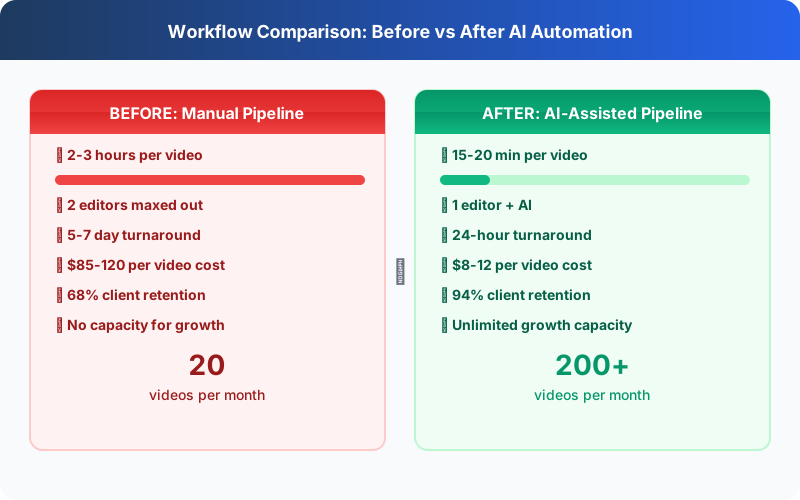
Workflow transformation: a real estate media company's pipeline before and after AI-driven automation.
The Problem: Bottlenecked at 20 Videos Per Month
By early 2025, this real estate media company was doing steady business serving 12 agent teams across three metro markets. The problem was familiar to anyone in the space: video production was a bottleneck. Each listing required 2-3 hours of manual editing — color grading, transitions, audio sync, text overlays, music selection. The company's two editors were maxed out at about 20 videos per month. Any new client meant either turning down existing work or expanding headcount, which carried overhead and training costs.
"We had agent teams asking us to do all their listings, but we couldn't take them on," the company's founder explained. "The math didn't work. Adding an editor meant $50,000+ in salary and benefits, plus onboarding time, plus the risk that the new hire wouldn't match our quality standards." This is a common ceiling in real estate media: the pricing model for video services is usually built around manual labor, and scaling that model requires linear headcount growth.
The automated editing dashboard replaced manual timeline work with templated, AI-driven production pipelines.
The Solution: AI-Driven Pipeline Redesign
Instead of hiring a third editor, the company redesigned its entire production pipeline around AI-assisted video tools. The key insight: most listing videos share a repeating structure — establishing shots, walkthrough, transitions, text overlays with property details, background music. The creative value comes from shot selection and pacing, not from rebuilding the same structure manually 20 times.
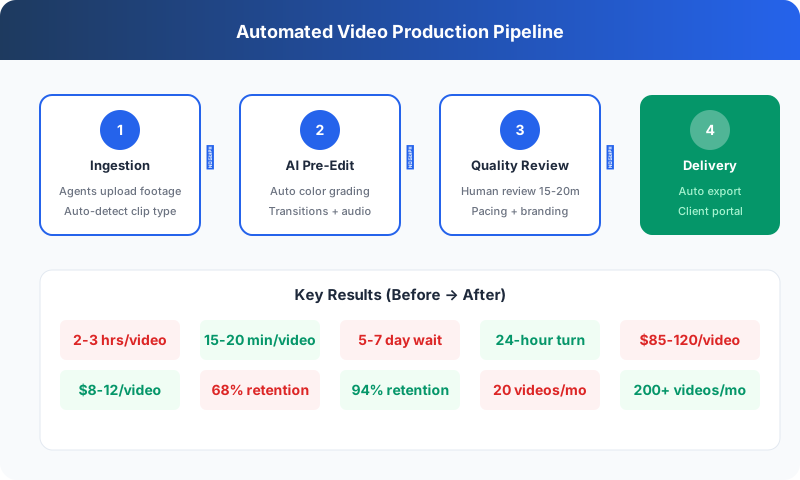
The new pipeline worked in four stages:
- Raw footage ingestion — Agents upload phone or camera footage directly through a client portal. The system auto-detects clip length, resolution, and content type (walkthrough, detail shot, exterior).
- AI pre-edit — An AI video editor analyzes the footage, selects the best clips, applies consistent color grading, adds transitions, and generates a first cut. Noise reduction and audio leveling happen automatically.
- Human quality pass — A single editor reviews each AI-generated draft, adjusts pacing, swaps shots, and adds client-specific branding. This takes 15-20 minutes instead of 2-3 hours.
- Automated delivery — Finished videos are exported with agent branding, compressed for MLS or social media, and delivered through a shared client portal with download links and social captions.
The company chose to build this pipeline around AI tools designed specifically for real estate video, not general-purpose editors. The difference mattered: a real estate-specific tool understands property walkthrough structure, can handle 50+ clips per listing, and applies the right effects (like speed ramping for empty-room walkthroughs) without manual tuning.
Before vs After: By the Numbers
| Metric | Before (Manual) | After (AI-Assisted) |
|---|---|---|
| Monthly video output | 20 videos | 200+ videos |
| Per-video editing time | 2-3 hours | 15-20 minutes |
| Editing team size | 2 editors | 1 editor + AI |
| Average turnaround | 5-7 days | 24 hours |
| Per-video editing cost | $85-120 | $8-12 |
| Client retention rate | 68% | 94% |
The most dramatic shift wasn't in output volume — it was in unit economics. At $85-120 per video with manual editing, the company was making slim margins on video work compared to their photo services. After automation, the per-video cost dropped into single-digit territory, which allowed them to offer video packages at price points agents would buy without hesitation. The same time-savings pattern that individual photographers saw with AI tools scaled to the team level here.
Team Structure: Same Headcount, 10x Output
This was the most surprising result: the company didn't fire anyone. Instead, the two editors were reassigned. One became a dedicated quality reviewer, managing 4 parallel AI pipelines instead of grinding through timelines. The other shifted to client onboarding — teaching agents how to upload footage properly, setting up brand templates, and managing the growing client base.
The shooter team (3 people) stayed the same size. What changed was their productivity per shoot. Because the editing pipeline could now handle any volume, shooters started capturing more footage per listing and covering more listings per day. The feedback loop tightened: shooters saw their work published within 24 hours instead of waiting a week, which improved their framing and shot discipline.
For photographers considering this path, the comparison is instructive. An individual photographer scaling from 5 to 50 videos per week (as covered in our earlier case study on scaling video production) faces different bottlenecks than a team scaling to 200 per month. The team's advantage: they can parallelize ingestion, processing, and delivery across multiple listings simultaneously.
Client Pipeline: Unlocking Demand with Speed
Before the automation upgrade, the company had 12 active agent teams. Turnaround was 5-7 days. Agents hesitated to commit to video for every listing because they couldn't rely on consistent delivery. Many defaulted to photos-only marketing.
After the pipeline redesign, the company offered a guarantee: "Upload any listing's footage by 3 PM, get your video by 3 PM tomorrow." This 24-hour promise fundamentally changed the relationship. Agents started sending every listing for video production. The company also introduced a video-only subscription tier — $X per month for up to 20 videos, no commitment per listing — which removed the friction of ordering one video at a time.
The client base grew from 12 teams to 38 within 6 months. Revenue from video work went from 22% of total revenue to 65%. The company's total monthly video output hit 200+ in month 7 of the new pipeline.
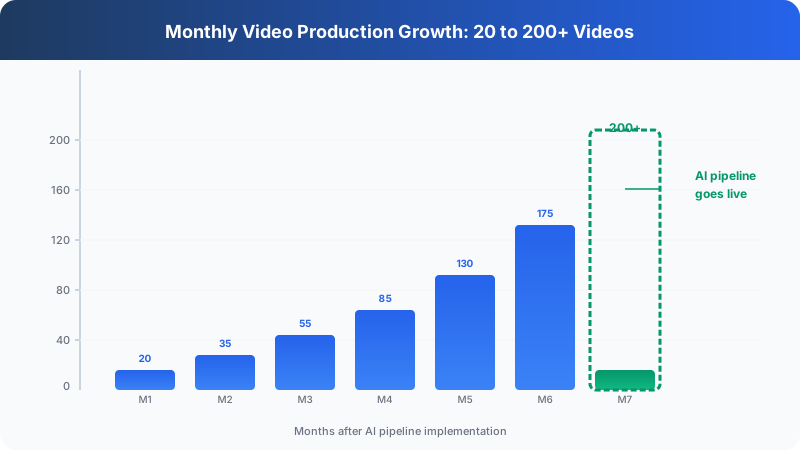
Monthly video production volume grew 10x within 7 months of implementing AI-assisted editing.
What Made It Work: Three Critical Factors
Not every media company will see these results. Three factors were critical to this transformation:
Factor 1: Purpose-Built AI Video Tools
General-purpose editors like Premiere Pro or DaVinci Resolve are powerful but not designed for real estate workflows. The company used AI video editors built specifically for real estate, which understood property walkthrough structure, could handle 50+ clips per listing automatically, and applied effects (speed ramps for walkthroughs, transitions between rooms) without manual tuning. A general tool that requires manual timeline work for every clip would not have produced the same speed gains.
Factor 2: Consistent Shot Standards
The company invested in shooting guidelines for their field team. Every listing got the same shots in the same order — establishing exterior, kitchen, living room, primary bedroom, bathrooms, secondary bedrooms, outdoor space. This consistency was essential for the AI pipeline to work reliably. When footage arrives in a predictable format, automated tools produce predictable results.
Factor 3: Human Quality Gate
Fully automated video production without any human review produces watchable but mediocre results. The company kept one editor in a quality-assurance role, reviewing every AI-generated draft. This 15-20 minute review caught timing issues, poor shot selections, and brand inconsistencies. The combination of AI speed + human taste produced videos that clients consistently rated higher than the old fully-manual product.
What This Means for Your Budget
For media company owners, the financial case is straightforward. At 200 videos per month with an effective editing cost of $8-12 per video (including the AI platform subscription and the editor's salary allocated per video), the margin on video work went from thin to substantial. The company now generates more profit from video in a month than it did from all services combined before automation.
According to National Association of Realtors research, listings with video receive 403% more inquiries than those without. Realtor.com data shows that listings with professional video sell 20 days faster on average than those with photos only. As real estate continues moving toward video-first marketing, media companies that can produce quality video at scale will have a structural advantage over those that can't. The same research shows that buyer demand for video content has increased every year since tracking began — and agent teams are actively looking for media partners who can deliver consistently.
Beyond Video: The Photo Pipeline Connection
One unexpected benefit of the automation upgrade: the same AI platform that handled video editing also streamlined the company's photo editing. Most modern AI real estate media platforms combine video editing, photo enhancement, and virtual staging into a single workflow. This company used VideoGuru for their video pipeline, which also gave them one-click photo editing — HDR enhancement, sky replacement, and declutter tools for still images. The AI photo editing capabilities that agents are learning about now are the same tools that power streamlined media company workflows.
Frequently Asked Questions
How much does it cost for a media company to automate video production?
The cost depends on the scale. For a media company producing 20+ videos per month, an AI video platform subscription (typically $100-500/month for team access) replaces thousands of dollars in per-video manual editing costs. In the case study above, per-video editing cost dropped from $85-120 to $8-12 — a 90% reduction. The breakeven point is usually within the first 1-2 months, after which the margin improvement is substantial.
Does AI video automation reduce quality?
No — when implemented correctly with a human quality gate, quality actually improves. AI handles consistency (color grading, audio levels, transitions) better than manual editing in many cases. The human reviewer focuses on creative decisions — pacing, shot selection, branding — which are the aspects that most affect perceived quality. In the case study, client retention rose from 68% to 94% after automation because turnaround was faster and quality was more consistent.
Can AI video tools really handle 200 videos per month?
Yes — but with an important caveat: the AI pipeline must be purpose-built for real estate video workflows. General-purpose editors can't handle the volume. Tools like VideoGuru, designed specifically for property video, understand walkthrough structure, handle 50+ clips per listing, and apply effects automatically. The key is pairing AI speed with a streamlined human review process — one editor managing multiple AI pipelines can review 7-10 videos per hour, making 200+ per month achievable with a single reviewer.
Do I need to hire more editors to scale video production?
No — that is the central lesson of this case study. The company scaled from 20 to 200+ videos per month without adding a single editor. Instead of linear headcount growth, they redesigned their pipeline so that one editor with AI tools could manage four parallel production pipelines. The editors were reassigned to higher-value roles (quality review and client onboarding) rather than replaced. Scaling through automation is more capital-efficient than scaling through hiring.
Ready to break through your own video production ceiling? VideoGuru's AI real estate media platform handles both video and photo editing in a single workflow — the same tools that power media companies producing 200+ videos per month. Start for free and see what your pipeline can handle.
The Verdict: Automation Is the Scaling Lever
This case study isn't a story about replacing editors. It's a story about removing the bottleneck that kept a good media company from growing. The editors didn't lose their jobs — they moved into higher-value roles. The company didn't sacrifice quality for speed — quality improved because the human reviewer could focus on creative decisions instead of mechanical work.
For any real estate media company hitting the 15-25 videos-per-month ceiling, the lesson is clear: the path to 200 videos per month doesn't run through hiring more editors. It runs through redesigning your pipeline around AI tools that handle the repetitive work, leaving your team to focus on the creative decisions that actually differentiate your output.
Watch how a real estate media company restructured its video production pipeline for 10x output.