

Chengran (Felix) Guan
2026-08-10 · 9 min read
Real Estate Content Marketing in 2026:
What's Working
Real estate content marketing in 2026 runs on video, works with AI, and rewards agents who publish consistently instead of occasionally. The listings that generate the most views, showings, and signed seller agreements today combine short video walkthroughs, professionally edited photos, and AI-assisted production that keeps turnaround under a day. This guide breaks down what is working, what changed, and how to build a content rhythm you can actually sustain around a full-time real estate schedule.
Key Takeaways
- Video is the highest-leverage listing content. The most-cited figure in real estate marketing holds that listings with video generate roughly 403% more inquiries than photo-only listings.
- Buyers start online. NAR research shows 97% of home buyers use the internet during their home search, and most tour only a handful of homes in person.
- AI is now the production layer. Agents and photographers use AI to edit videos, enhance photos, and virtually stage properties in minutes instead of hours.
- Photo plus video beats either alone. Photos feed search and MLS listing pages; video drives engagement on social platforms and listing sites.
- Consistency beats volume. A predictable weekly rhythm outperforms occasional bursts of polished content.
- Compliance still matters. MLS video rules and AI disclosure requirements apply to the content you publish in 2026.
Why Content Marketing Changed in 2026
Buyer behavior shifted first, and agent marketing followed. The National Association of REALTORS® Profile of Home Buyers and Sellers consistently finds that the overwhelming majority of buyers search online before they ever contact an agent. In practice, that means your listing content is your first showing — and for most buyers, it is the only showing that matters until they narrow their list to a few homes to tour in person.
Three forces define 2026:
- Video is expected, not optional. Buyers now treat a walkthrough video as standard listing material. The listings that stand out deliver one within days of hitting the market.
- Short-form platforms decide reach. Social platforms and even search engines surface short video aggressively. A 30-second clip of a great kitchen can outperform a week of static posts.
- AI collapsed production time. What used to take an editor a full day now takes an agent or photographer under an hour with the right tools. That changes what is possible for a solo agent.
The result: content marketing went from a nice-to-have to the primary way agents compete for both buyers and seller clients. NAR’s buyer research and Realtor.com market research are the two most useful free data sources for deciding what to publish, because both track how buyers actually search and consume listing media.
The 2026 Content Mix That Actually Works
A content mix is the set of content types you produce for every listing, plus the content you publish between listings to stay visible. In 2026, the working mix looks like this:
- Listing video walkthrough (60-120 seconds): the anchor piece. Room-by-room tour with clear narration or text captions.
- Short-form clips (15-60 seconds): one highlight per clip — the kitchen, the view, the primary suite. Built for social platforms and text threads.
- Professional photo set: still the backbone of the MLS listing and search results. Clean, bright, correctly exposed photos matter more than any single video.
- Virtual staging where needed: vacant rooms get furniture, so buyers can picture living there. Used on the rooms that need it, disclosed where required.
- Before-and-after content: renovation visualizations and virtual staging comparisons perform strongly on social media because they are visually obvious and shareable.
- Market updates and community content: the content between listings that keeps your name in front of past clients and future sellers.
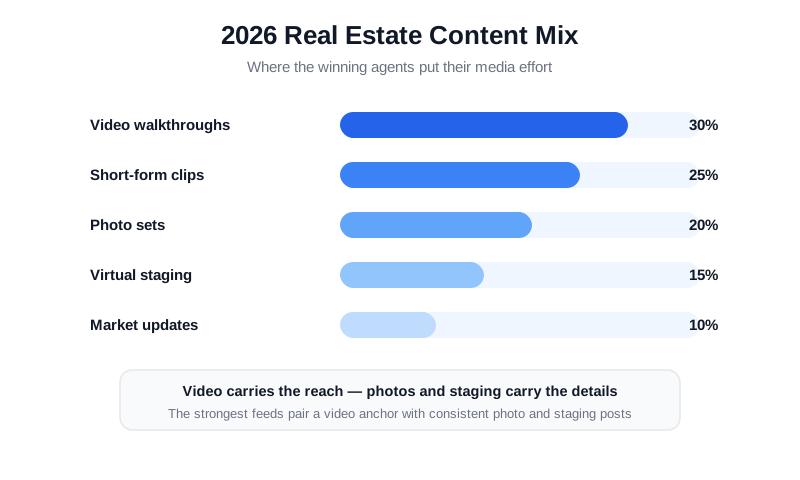
The 2026 content mix: video anchors the listing, photos feed search, and short-form clips drive social reach.
What gets cut in 2026: unedited phone photos, text-heavy flyers, and posting the same three photos across five platforms with no video at all. If a listing only has still photos, it is invisible to the buyers who start with video. For a deeper look at which content types convert, see our guide to real estate video content that actually converts and our 30-day plan of real estate video ideas for social media.
Watch: how top agents structure a sustainable content marketing system.
AI Is the Production Layer, Not a Shortcut
The biggest shift in 2026 is that AI moved from experimental to routine. Agents using AI marketing tools consistently report reclaiming hours of production time each week, and brokerages keep shifting budget toward marketing technology. But the honest framing is this: AI does not replace judgment, it replaces labor. The agent still decides the story, the order, and the moments that matter. The AI handles the repetitive production work that used to make content marketing impractical for a solo agent.
Three AI capabilities matter most for agents:
- Photo-to-video conversion: turn an existing photo set into a paced walkthrough video with transitions, captions, and music. This is the fastest win because the photos already exist.
- AI photo enhancement and virtual staging: fix exposure and color, remove clutter, replace dated furniture, and stage vacant rooms without a crew. AI photo editing for real estate covers what these tools can and cannot fix.
- Automated video editing: assemble walkthroughs, add your branding, and export multiple formats for different platforms from one source file.
The quality bar is real. AI-assisted content still needs a human review pass before it goes live — checking room order, caption accuracy, and disclosure requirements. When you treat AI as the production layer under your editorial judgment, the result is content that looks professional and ships fast. Our step-by-step guide to creating listing videos in under 10 minutes with AI walks through a production workflow that fits between showings. For the broader landscape, see our overview of AI trends shaping real estate marketing in 2026.
Business media have tracked this shift closely. Coverage of AI adoption in real estate marketing on Entrepreneur’s real estate coverage consistently frames the same pattern: the tools are cheap, the competition is not waiting, and the agents who adopt early are the ones who stand out in their market.
Photo and Video Work Together — Here Is the Order
Agents often ask whether to prioritize photos or video for a listing. The answer in 2026 is both, in a specific order. Photos feed the places buyers filter first: MLS search results, listing portals, and the top of your own website. Video feeds the places buyers engage: social platforms, text message threads, and listing pages where a walkthrough is now standard.
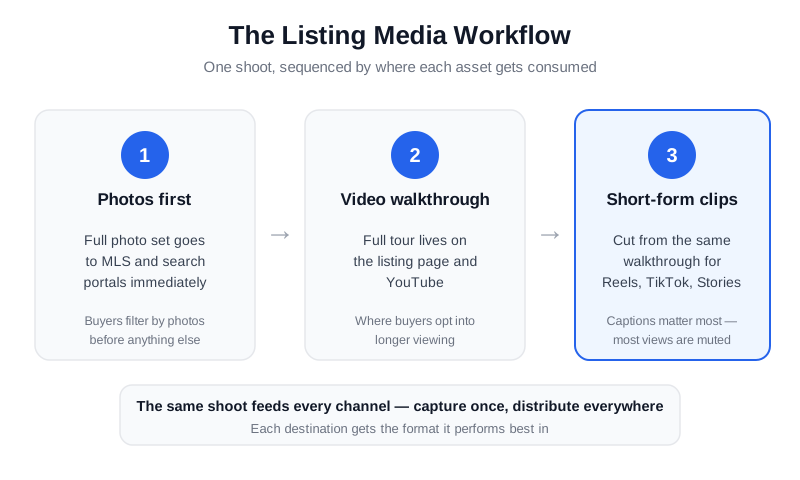
Shoot once, publish everywhere: photos feed search and MLS, video feeds engagement.
A practical order for each listing:
- Professional photo set first. This is the listing backbone. Bright, well-composed, correctly exposed images across every room.
- Virtual staging for vacant or dated rooms. Stage what needs it, leave honest rooms alone, and follow disclosure rules.
- Walkthrough video from the photo set. A photo-to-video AI tool produces this in minutes without a second shoot.
- Short-form clips for social. Cut the best moments into 15-60 second clips with captions for sound-off viewing.
- Distribute everywhere, consistently. Listing portal, social platforms, email, and text threads.
This is exactly why VideoGuru covers both sides of the media stack. Beyond video, VideoGuru’s photo editing tools give you one-click virtual staging, decluttering, furniture swaps, and decor changes for still images. The same AI that powers your video walkthroughs also handles your listing photography — so one subscription replaces a patchwork of editing services. For a decision framework on when video matters most, read photo vs video: which agents should prioritize per listing. To understand the conversion mechanics, see how to turn listing photos into listing videos with AI.
What Agents Should Stop Doing in 2026
Some marketing habits die slowly. These are the ones costing agents the most in 2026:
- Posting without a plan. Random posts get random results. A repeatable rhythm for each listing and each week beats inspiration-based posting.
- Ignoring MLS media rules. Video requirements, file formats, and AI disclosure rules vary by MLS. Publishing non-compliant content means takedowns and seller frustration. Our MLS video requirements guide and AI photo disclosure rules cover the details.
- Treating every listing the same. A vacant starter home and a staged luxury property need different media. Match the content to the property.
- Deleting old content. Past listings, market recaps, and neighborhood posts compound your local authority. Archive, do not delete.
- Inconsistent branding. Different fonts, colors, and music in every video make your content feel generic. A simple brand kit — logo, colors, intro, outro — makes everything look intentional.
- Chasing volume over consistency. Twenty posts one week and nothing for three weeks loses to one well-made video every week.
A Sustainable Weekly Content Rhythm
Sustainabillity is the whole game. Here is a weekly rhythm that fits around showings, paperwork, and open houses — roughly one content block per day, most of it produced in a single batch session:
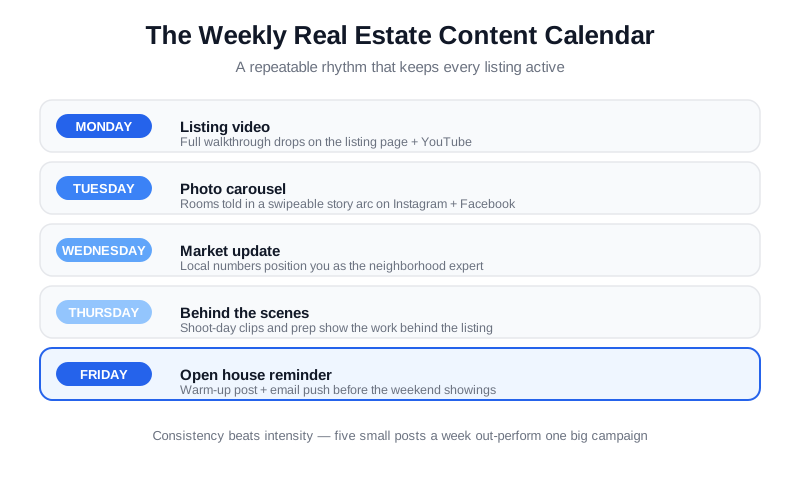
A sustainable weekly rhythm: one content block per day, produced in a single batch.
- Monday: listing walkthrough video for the newest active listing.
- Tuesday: photo carousel — the best shots from the same listing, formatted for social.
- Wednesday: market update — a 30-60 second local stat or neighborhood highlight.
- Thursday: behind-the-scenes or renovation before/after content.
- Friday: open house reminder with the walkthrough video attached.
- Weekend: one property highlight or testimonial — keep it light.
The trick is batch production. Shoot and gather media once, then produce all of the week’s content in a single session with templates. Our guide to real estate video marketing strategy covers the full planning side, and the research on where buyers spend their attention is summarized in Pew Research’s social media fact sheet, which tracks which platforms adults actually use year over year.
Frequently Asked Questions
Is real estate content marketing still worth it in 2026?
Yes, and it is now the primary way buyers discover listings and sellers choose agents. Buyers search online before contacting an agent, which means your listing content is your first showing. The agents gaining market share in 2026 are the ones publishing consistent, well-produced content — and AI tools have made that practical for solo agents.
How much time does real estate content marketing take per week?
With batch production and AI-assisted editing, a realistic figure is two to four hours per week for a single-agent operation: one shoot or media-gathering block, one editing session, and daily five-minute posting. Without AI assistance, the same output typically takes a full day because video editing dominates the timeline.
Do I need professional video for every listing, or are photos enough?
Photos are the non-negotiable baseline — clean, professional stills are required for search and MLS performance. Video is the differentiator that drives inquiries and engagement. For most listings, a photo-to-video AI workflow produces a walkthrough from the existing photo set, so video no longer requires a second shoot or a videographer budget.
Can AI really make my listing content look professional?
Yes, when you keep editorial control. AI handles the labor — pacing, transitions, captions, color, virtual staging — and you handle the judgment: which rooms matter, what the captions say, and how the content complies with MLS and disclosure rules. A human review pass before publishing keeps the quality bar high while the AI keeps the turnaround fast.
Ready to build a 2026 content workflow that produces polished listing video and photos without eating your week? VideoGuru’s AI video editing and photo tools can turn a single shoot into walkthroughs, short-form clips, and enhanced listing photos in minutes. Start for free at VideoGuru.
The Bigger Picture
Content marketing in real estate is becoming a system instead of a series of tasks. The agents who treat it as one — shoot once, produce everything, distribute everywhere, on a repeatable weekly rhythm — are the ones who stay visible when the market gets competitive. The technology keeps getting cheaper and faster; the scarce resource is consistency. That is the real content strategy for 2026: show up every week, make it look professional, and let the buyers and sellers you serve see the work.