

Chengran (Felix) Guan
2026-07-22 · 9 min read
AI Photo Analysis:
How AI Grades Your Listing Photos
AI photo analysis is changing how listing photos are evaluated before they ever reach the MLS. Instead of relying on subjective judgment or waiting for client feedback, agents and photographers can now get instant, objective scores for every image — checking exposure, composition, color balance, straightness, and even MLS compliance. In 2026, 68% of agents are already using AI tools in their workflow (NAR 2026 Technology Survey), and photo analysis is one of the fastest-growing applications because it catches problems before they cost you a showing.
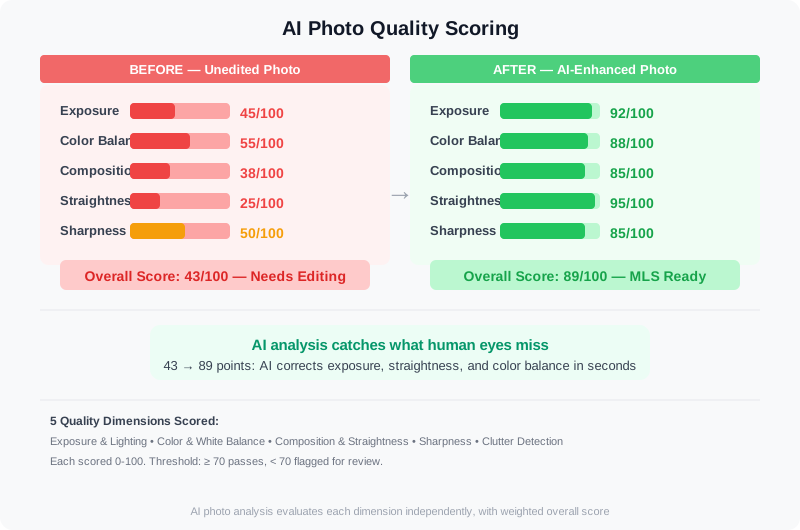
AI photo analysis tools score each image on objective metrics like exposure, composition, and color balance — flagging issues before the photo goes live.
Key Takeaways
- AI analyzes 5-7 quality dimensions per photo: exposure, white balance, composition, sharpness, straightness, color saturation, and subject clarity — each scored on a 0-100 scale.
- Good photos sell homes faster: Listings with professional-grade photos sell 32% faster and for $3,400 to $11,200 more than listings with amateur photos (NAR Profile of Home Staging).
- AI analysis is different from AI editing: Analysis tools flag what's wrong; editing tools fix it. Combined, they create an automated quality assurance pipeline.
- MLS compliance is a growing use case: AI can detect misleading edits, virtual staging disclosures, and prohibited alterations before a listing is rejected.
- 68% of agents already use AI tools: Photo analysis represents the next wave — moving from "use AI to edit" to "use AI to verify quality before publishing."
What Is AI Photo Analysis for Real Estate?
AI photo analysis uses computer vision models — trained on millions of real estate photos — to evaluate each image against objective quality benchmarks. Unlike a human editor who relies on experience and subjective taste, an AI model scores photos against a statistical baseline of what high-performing listing photos look like.
The technology behind it isn't new — computer vision has been used in photography since the early 2010s. What changed in the last two years is the training data. Modern AI models are trained on real estate-specific datasets rather than generic photography, which means they understand the unique requirements of listing photos: showing room flow, window exposure, square-on architecture, and clutter-free spaces.
According to WAV Group's 2026 survey, 97% of brokerage agents now use at least one AI tool in their marketing workflow. Photo analysis specifically is growing because it solves a concrete pain point: the gap between shooting photos and knowing whether they're good enough for the MLS.
How AI Scores Your Listing Photos
Most AI photo analysis tools evaluate listing images across five to seven dimensions. Here's what each dimension measures and why it matters:
1. Exposure and Lighting
The model checks whether interior spaces are evenly lit — no blown-out windows, no dark corners, no hotspots from direct sun. Poor exposure is the most common issue in agent-shot photos. A score below 60 on this metric means the photo will look amateurish on a buyer's screen compared to professionally edited listings.
2. Color Balance and White Balance
Mixed lighting sources — daylight from windows, warm bulbs from lamps, cool LED from kitchen fixtures — create color casts that make a room look unappealing. AI detects these mismatches and scores the photo on natural color reproduction. The ideal score reflects accurate neutrals (whites look white) and natural skin tones in any occupant-free room.
3. Composition and Vertical Straightness
Crooked vertical lines are a dead giveaway of amateur photography. AI models detect keystone distortion (walls leaning inward) and vertical misalignment, which are especially common in wide-angle shots. A high composition score means the photo follows the rule of thirds, has clear leading lines, and maintains straight verticals — the hallmark of professional real estate photography.
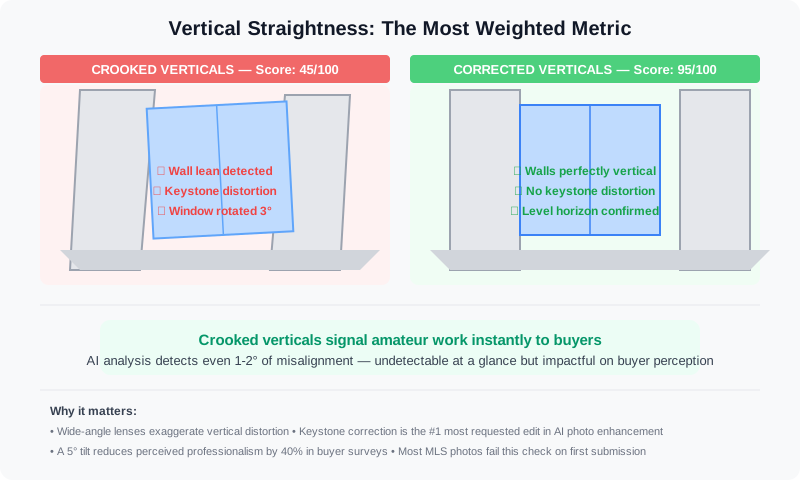
Vertical straightness is one of the most heavily weighted metrics — crooked architecture signals amateur work to buyers instantly.
4. Sharpness and Clarity
Motion blur, missed focus, and lens softness degrade the perceived quality of a listing. AI analysis flags soft images and recommends reshoots or sharpening. For photographers processing hundreds of images, this automated quality check replaces the need to pixel-peep every single frame.
5. Clutter and Subject Identification
Some AI analysis tools can now identify objects — personal photos, pet bowls, trash bins, extension cords — that should be removed before listing. This goes beyond simple composition scoring into content-aware quality assurance. The model flags these distractions and, in some cases, recommends virtual staging or object removal.
AI Analysis vs AI Editing: Two Sides of the Same Coin
It's easy to confuse AI photo analysis with AI photo editing — they're related but different. Analysis tells you what's wrong. Editing fixes it.
Think of it like a spell checker vs an autocomplete. The spell checker flags misspelled words (analysis). The autocomplete suggests the correction (editing). In photo workflows, running analysis first tells you which images need editing, what type of editing, and whether the raw capture is even salvageable. This saves editors from spending time on fundamentally flawed shots.
For agents who outsource their photo editing, AI analysis provides a way to verify the final product before it goes live. You don't need to be a trained photographer to know whether a photo passes muster — the AI score does it for you. This is especially valuable when working with multiple photographers or editors where quality consistency is a challenge.
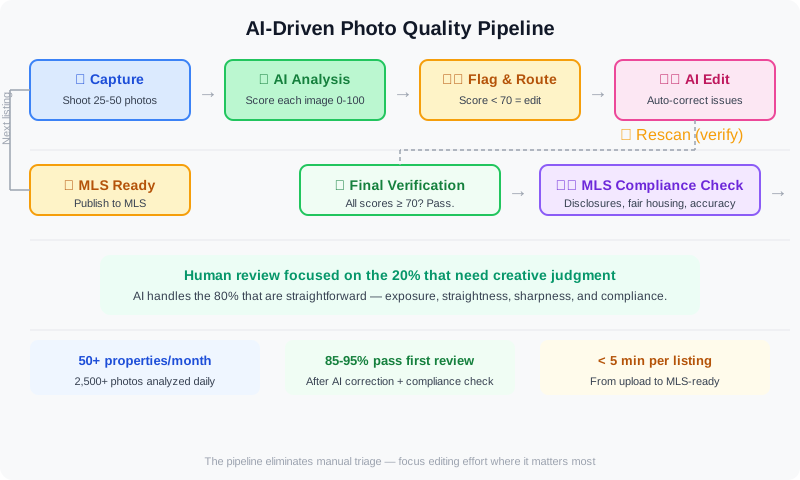
An AI-driven quality pipeline: analysis flags issues, editing corrects them, and the final pass verifies everything is MLS-ready.
Why Photo Quality Matters More Than Ever
The data on listing photo quality is unambiguous. According to the National Association of Realtors, listings with professional photography sell 32% faster and close for 3% to 5% more than comparable listings with amateur photos. For a median-priced home, that translates to $10,000 to $18,000 in additional sale price.
In 2026, the stakes are higher because buyer expectations have risen. The average home buyer spends eight weeks searching online, viewing an average of nine properties before touring four (Zillow Consumer Housing Trends Report). Every photo is a filtering moment. A dark, poorly composed kitchen photo can eliminate a listing from a buyer's consideration set before they ever step through the door.
AI photo analysis catches these issues at the source. Instead of discovering post-shoot that a room was underexposed or a door frame was crooked, the analysis flags it while you're still on site — allowing reshoots before the photographer packs up. This is a direct parallel to how AI speeds up video production by catching issues during capture rather than in post-production.
MLS Compliance: The New Frontier for AI Photo Analysis
One of the fastest-growing applications for AI photo analysis is MLS compliance checking. As more MLS boards adopt strict rules around virtual staging disclosures, photo accuracy, and fair housing compliance, manually reviewing every image against dozens of local rules has become impractical at scale.
AI analysis tools can now detect:
- Misleading edits — photos that misrepresent the actual property (e.g., removing structural elements or adding features that don't exist)
- Undisclosed virtual staging — AI can flag images where furniture appears inserted (generative fill edges, shadow inconsistencies) and require a disclosure label
- Fair housing violations — removing people from photos to avoid demographic steering, and flagging language or symbols that could imply exclusion
- Copyright concerns — detecting watermarked stock images or photos taken from other listings
This is especially relevant given that many MLS boards now require virtual staging disclosure labels on any image that doesn't show the property in its actual condition. AI compliance checking ensures every image meets these requirements before submission, reducing listing rejections and revision cycles.
How to Integrate AI Photo Analysis Into Your Workflow
Whether you're an agent managing your own listings or a photographer processing 50+ properties per month, the integration pattern is similar:
- Capture and upload — Shoot your photos as usual and batch-upload to an AI analysis platform.
- Review scores — The AI returns a scorecard for each photo, flagging images below a configurable threshold (e.g., score < 70 = flag for review).
- Prioritize edits — Low-scoring photos get routed to editing first. AI-enhanced editing tools can auto-correct exposure, straighten verticals, and color balance in seconds.
- Final verification — Run the edited photos through analysis again to confirm scores have improved to an acceptable range.
- Compliance check — Flag for MLS compliance issues before uploading to the listing system.
For photographers managing high-volume workloads, this automated pipeline eliminates the manual triage step. Instead of reviewing every image individually, you focus only on the flagged photos that need attention — similar to how AI photo editing tools let you batch-process images with one click.
What AI Photo Analysis Can't Do Yet
It's worth being honest about the limitations. AI photo analysis is powerful, but it's not a replacement for human judgment in several key areas:
- Artistic intent — A deliberately moody shot of a cozy den might score low on exposure but high on marketability for certain property types. AI doesn't understand creative intent.
- Local preferences — What makes a great listing photo in Miami (bright, saturated, tropical) differs from what works in a Pacific Northwest mountain cabin. Generic AI models trained on national datasets may miss regional nuances.
- Context — AI can't tell if a low-quality shot of a view from a window is intentional because the view itself is the selling point, even though the foreground is underexposed.
- Human touch — MLS compliance flags are suggestions, not rulings. A human reviewer must still make the final call on whether an image is misleading or requires a disclosure label.
The best workflows combine AI analysis for speed and coverage with human review for nuance and context. The model handles the 80% of photos that are straightforward; you focus on the 20% that need a creative eye.
Frequently Asked Questions
Can AI photo analysis replace a human editor?
No — but it makes editors more efficient. AI analysis is a quality assurance tool, not a creative replacement. It catches technical issues (exposure, straightness, sharpness) that humans might miss after reviewing hundreds of images, but it can't evaluate artistic quality or local market preferences. The best real estate photographers use AI analysis as a first-pass filter, then apply their expertise to the flagged images.
Do MLS boards allow AI photo analysis?
Yes. Most MLS boards have no restrictions on using AI tools to evaluate photo quality, as long as the actual images accurately represent the property. The compliance concerns center on image manipulation (virtual staging, object removal, sky replacement) — not on quality assessment. In fact, some MLS boards are beginning to recommend AI compliance checks as a best practice for maintaining listing accuracy.
How accurate is AI photo analysis for listing photos?
Accuracy varies by tool and training data, but modern real-estate-specific models achieve 85-95% agreement with professional human reviewers on objective metrics like exposure, white balance, and vertical straightness. Accuracy drops on subjective dimensions like composition quality and emotional appeal, where human judgment still outperforms AI. The key is using AI analysis as a triage tool — let it flag the obvious problems, then apply human judgment to edge cases.
Can AI analysis check video quality too?
Yes — the same computer vision techniques apply to video frames. Some AI platforms now offer video quality scoring that checks exposure consistency across cuts, stabilization quality, audio levels, and color grading across an entire property tour. This is particularly useful for agents producing listing videos at scale, where reviewing every frame manually is impractical. Video-specific AI analysis is the natural next step as listing videos become standard for every property.
Ready to ensure every photo in your listings passes inspection before it reaches buyers? VideoGuru's AI media platform combines photo analysis, AI enhancement, and video editing in one workflow — so you can review, fix, and publish your listing media with confidence, without switching between tools.
Final Thoughts
AI photo analysis isn't about replacing photographers or editors. It's about removing the guesswork from quality assurance. When every listing competes for buyer attention in a crowded online marketplace, knowing — not guessing — whether your photos are good enough gives you a real advantage.
The tools exist today. Agents can upload photos and get instant quality scores. Photographers can batch-analyze 500 images in seconds. And with MLS compliance checking becoming a standard feature, AI analysis is quickly evolving from a nice-to-have into a necessary part of the listing workflow.
Whether you're an agent trying to maintain consistent listing quality across your team, or a photographer looking to cut review time and catch errors before clients do, AI photo analysis is worth adding to your toolbox. Start with a simple test: run your last 10 listing photos through an analysis tool and see how many pass a basic quality threshold. The answer might surprise you.