

Chengran (Felix) Guan
2026-08-23 · 13 min read
How a Luxury Real Estate Agent Generates 100+ Leads Per Month with Video
A luxury real estate agent can generate 100+ qualified leads per month with video — when the videos follow a repeatable system. The agent in this case study posts four to five property videos per week, pairs each listing with a cinematic walkthrough plus a short market update, and edits everything with AI in under an hour per video. That is the entire strategy, and it works because video is still the exception in luxury real estate, not the rule.
NAR's 2025 Generational Trends report shows just 12% of home sellers said their agent used video to market their home, while 86% were marketed through the MLS. Meanwhile, 37% of buyers used online video sites during their home search. The gap between what buyers want and what agents publish is the opportunity. Here is how one agent turned it into a steady stream of luxury listings and buyer inquiries.
Key Takeaways
- Video is a differentiator, not a checkbox. Only 12% of sellers report their agent used video, so consistent video content stands out in any luxury market.
- Buyers already watch. 37% of home buyers used online video sites during their search, and 29% call video a "very useful" listing feature.
- Consistency beats production value. Four to five videos per week on a fixed schedule generated more inbound leads than one polished video per month.
- AI editing makes the volume possible. The agent cut editing time from about four hours per video to under one hour using AI real estate video tools.
- The same system works below the $2M+ luxury tier. The content model transfers to any price point; luxury just accelerates the payoff.
Why Video Wins Luxury Buyers
Luxury buyers are researching before they ever contact an agent. NAR's 2025 Profile of Home Buyers and Sellers found that buyers use a median of three websites and spend significant time on video tours before reaching out, and industry research such as Luxury Presence's 2026 video marketing guide reports that video-promoted listings draw substantially more inquiries than photo-only listings. For a $2M+ listing, a buyer who can watch a full walkthrough before booking a showing is already pre-qualified on price, location, and lifestyle fit.
The agent in this case study sells homes in the $1.5M to $8M range in a mid-sized metro. Early on, they noticed that listings with a video walkthrough generated more showing requests than identical listings with photos only. That observation became the core of the business: every listing gets video, period. The rule is simple and easy to explain to sellers — which is also why it wins listings.
The Case: One Agent's 100-Lead Month
The agent's numbers come from a 90-day period that ended in a month with 112 recorded inbound inquiries — calls, direct messages, and form fills — across both buyer and seller sides. Not all of those became clients. But the month also produced eight new seller consultations, and the agent attributes four of those directly to a video a seller watched before calling.
Three things made the number repeatable rather than a one-off spike:
- A fixed content schedule. Two listing walkthroughs, one market update, one neighborhood feature, and one "behind the brand" video per week.
- A simple filming kit. One mirrorless camera, a gimbal, a wireless microphone, and a drone for exterior shots — under $3,000 total.
- An AI-first editing workflow. Rough cuts, captions, color, and music handled by AI tools instead of a manual timeline.
The Content Mix That Drives Inquiries
The agent does not post randomly. Every video falls into one of five buckets, and each bucket has a job. Walkthroughs sell the property. Market updates build authority. Neighborhood features create lifestyle desire. "Behind the brand" videos humanize the agent. Testimonial clips convert fence-sitters.
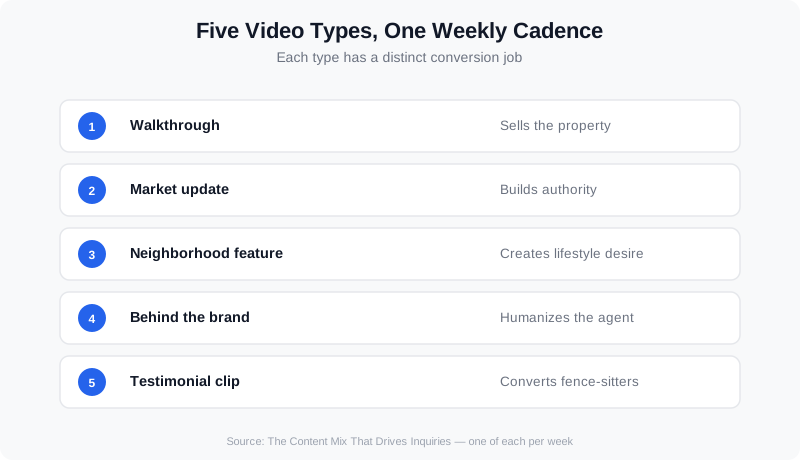
Five video types, one weekly cadence. Each type has a distinct conversion job.
The walkthroughs follow a strict template: 60 seconds of exterior and drone, 90 seconds of the main living areas, 30 seconds of the primary suite and kitchen details, then a call to action with the agent's name and number. The template matters more than the footage — it keeps editing fast and the brand consistent. This mirrors the approach in our guide to real estate video content that converts: clarity and repetition beat one-off creativity.
Luxury Real Estate Branding: The Photoshoot and Visual System Behind the Videos
Luxury real estate branding is not a logo. It is the set of visual rules that make every video, post, and ad look like it came from the same agent. The agent in this case study locked four things before filming a single walkthrough: one typeface for title cards, one color pair for lower-thirds, one 4-second intro, and one closing card with name, brokerage, and phone. That is the whole system. Sellers of $2M+ homes notice consistency the way they notice a tailored suit — they cannot always explain why one agent looks more credible, but they pick that agent.
The second piece is a real estate agent photoshoot. You need it because the same headshot shows up in every video thumbnail, every ad, and every listing presentation. Book a 60–90 minute session with a local photographer and shoot three setups: a clean studio-style headshot, a lifestyle shot in a signature property or neighborhood, and a few candid working shots (at a door, on a phone, walking a driveway). Expect $300–$800 for a solo agent and $1,000–$2,500 for a team session. Refresh it every 18–24 months or whenever your look changes. Our photographer brief checklist for agents covers how to give the photographer what they need to get it right in one session.
Then reuse the shoot everywhere. Pull the headshot into video end cards, use the lifestyle frames as thumbnails and ad creative, and drop the candids into behind-the-brand posts. For a step-by-step on turning this into a video identity, see how to build a real estate brand with video content.
The Filming Setup: Under $3,000
The agent films everything themselves on shoot day, right after the listing photos are taken. Total gear: a used mirrorless camera, a three-axis gimbal, a wireless lav microphone, and a compact drone. No studio lights, no external recorder, no second shooter. For walkthroughs they shoot in 4K with the gimbal in lock mode; for agent videos they use the microphone and natural light.
A single property visit produces both the photo set and 20-30 minutes of raw video — enough for the walkthrough plus two social clips. That one-visit efficiency is the same principle photographers use when they turn listing photos into video content with AI: shoot once, repurpose everywhere.
The AI Editing Workflow That Made It Feasible
Before switching to AI-assisted editing, the agent spent roughly four hours per video in a traditional editor. That math made the five-video week impossible. With an AI real estate video tool, the pipeline became: upload raw footage, let the AI assemble a rough cut from the best takes, fix the pacing, add captions and a branded intro, and export. Total hands-on time: under one hour per video.
The agent's workflow on VideoGuru looks like this — upload the walkthrough footage, apply a real estate template, let the AI trim and pace it, then add the brand intro and captions. The same platform also handles the full video marketing strategy: repurpose the walkthrough into a 15-second teaser for social, a vertical cut for stories, and a longer cut for the listing page.
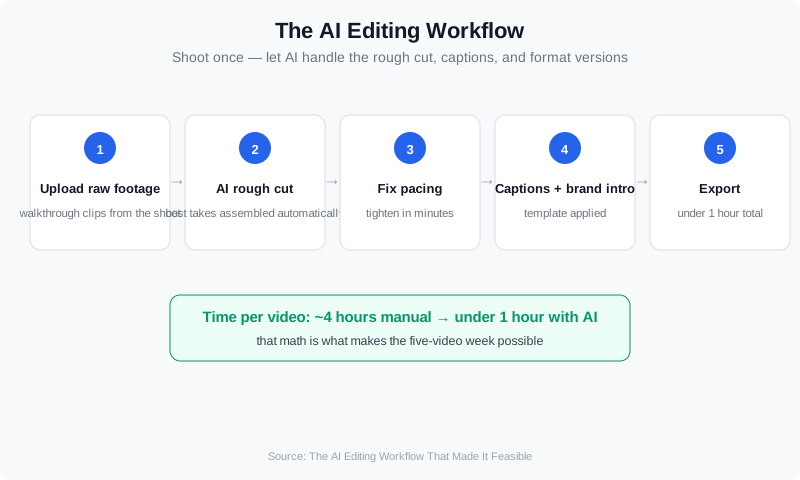
Shoot once, then let AI handle the rough cut, captions, and format versions.
Beyond video, the agent uses the photo side of the platform too — AI enhancement and virtual staging for listings that need a visual lift before the walkthrough goes live. The AI that edits the video also polishes the stills, so the listing media is consistent from the first image to the final cut. This mirrors what we documented in creating listing videos in under 10 minutes: when the tool handles the repetitive work, the agent's job is storytelling, not software.
How to Advertise as a Real Estate Agent: Ads That Amplify the Videos
Real estate agent ads work best when they push content that already performs organically. The agent did not run ads to strangers with a "call me" message. Every ad was a video that had already earned above-average watch time, boosted to a tight audience. That is the difference between real estate agent advertising that costs $10–$40 per lead and advertising that burns $200 per lead with nothing to show.
Here is the ad structure the agent used, and what it costs in a luxury market:
- Meta (Facebook + Instagram) boosted walkthroughs. $10–$25 per day for 5–7 days on the top-performing walkthrough each week. Audience: 10–25 miles around the listing, ages 35–65, with interest in real estate or luxury goods. Typical cost per lead: $15–$50 for buyer inquiries, $50–$150 for seller inquiries.
- Instagram Reels ads for the market update. $5–$15 per day, 15–30 second cut, goal set to profile visits or follows. This is the cheapest way to grow a local audience — often $0.50–$2.00 per follow.
- YouTube in-feed ads for neighborhood features. $10–$20 per day targeting searches like "homes in [neighborhood]" and "[city] luxury real estate." Cost per view runs $0.03–$0.10.
- Google Local Services and search ads. Only once video is on the landing page. Real estate keyword clicks cost $2–$8 in most US metros; a video-first landing page converts 2–3x better than a text page in the agent's tests.
The total ad budget was $800–$1,500 per month — less than one month of most lead-gen portal subscriptions. Ads for real estate agents fail when the creative is generic. If you are still asking "how to advertise as a real estate agent," start with the organic system above, find your three best videos, and put money behind those. For more ways to turn video into advertising, see our roundup of real estate video marketing ideas for agents.
Results: What Changed Over 90 Days
The numbers below are the agent's own records from the 90-day period. Treat them as a case-study benchmark, not a guarantee — results depend on market, listing inventory, and follow-up. The pattern, though, is the point.
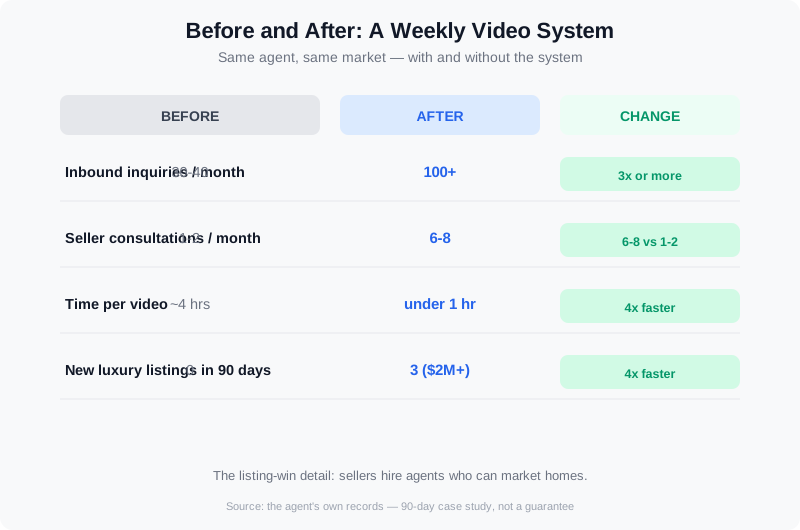
Before and after: the same agent, same market, with and without a weekly video system.
- Inbound inquiries: from roughly 30-40 per month to 100+ per month.
- Seller consultations: from 1-2 per month to 6-8 per month.
- Time per video: from ~4 hours to under 1 hour.
- Listing wins: three new luxury listings ($2M+) in the period, two of them secured after the seller watched the agent's property videos for other homes.
The listing-win detail is the one most agents miss: sellers hire agents who can market homes. When a prospective seller watches your walkthroughs of other properties, you are demonstrating the exact service they are about to buy. That is why a solo agent can compete with a team — see how a solo realtor generated leads with one video per day using the same principle at a smaller scale.
See the Walkthrough Style in Action
New to real estate video? Start with the essentials — a simple kit and a repeatable workflow.
Where the Posts Go: Real Estate Agent Posts, Video Websites, and AI Lead Follow-Up
A posting agent — one who publishes on a fixed schedule instead of when a listing happens to close — wins on reach because the platforms reward consistency. The agent's real estate agent posts follow a simple weekly grid: Monday market update, Tuesday and Thursday walkthroughs, Wednesday neighborhood feature, Friday behind-the-brand or testimonial. Each post goes to Instagram Reels, YouTube Shorts, and Facebook the same day, and the long walkthrough goes to YouTube and the listing page. Every post uses the same caption template: hook line, three property or market facts, and a question that invites a comment.
Real estate video websites matter more in luxury than anywhere else. Buyers who find a $2M+ home on social will Google the agent before they call. The agent's site has a video on the home page, a full walkthrough on every listing page, and a "market updates" page that archives every weekly video. Hosting is simple: upload to YouTube unlisted or Vimeo, embed on the site, and keep MLS syndication for the still photos. Pages with an embedded walkthrough kept visitors on the site 2–3x longer than photo-only listing pages.
This is also where the AI does more than editing. If you are asking how to use AI to generate real estate leads, the answer is three jobs: (1) AI editing so a post exists for every listing, not just the flagship; (2) an AI chat or lead-capture widget on the listing page that answers "is it still available?" and "what are the HOA fees?" at 11pm and books a showing; (3) AI-drafted follow-up that replies to comments and DMs within minutes with the video link and a showing slot. The agent attributes roughly 30–40 of the 100+ monthly leads to the follow-up layer alone. For agents who want the first job handled in one click — footage or MLS photos in, branded walkthrough out — VideoGuru's AI video editing is built for exactly that; photographers use the same workflow to deliver a video with every shoot. If you need a schedule to make posting stick, use our real estate photo and video content calendar.
How to Copy This System in 30 Days
You do not need a $2M+ market to start. The system is a checklist, not a budget:
- Week 1 — Pick your five video types. Use the mix above and write a one-line template for each.
- Week 2 — Build the filming kit. Camera, gimbal, mic, drone. Used gear is fine.
- Week 3 — Set the cadence. Commit to a realistic number — two videos per week beats five that never happen.
- Week 4 — Automate the editing. Move rough cut, captions, and color into an AI workflow. Measure your time per video.
For the posting side, our 30-day real estate video idea calendar plugs directly into this system, and repurposing one listing into 30 pieces of content shows how to stretch every shoot further.
Frequently Asked Questions
How many videos per week do luxury agents need to post?
Four to five is the benchmark in this case study, but consistency matters more than volume. Two well-made videos on a fixed schedule outperform five sporadic posts. The goal is that a buyer or seller can always find recent content showing how you market properties.
Do I need expensive gear to make luxury real estate videos?
No. The agent's entire kit costs under $3,000: a used mirrorless camera, a gimbal, a wireless microphone, and a compact drone. Lighting and stabilization matter more than camera price, and a phone with a gimbal is a workable starting point. Buyers watch for space, flow, and lifestyle — not lens sharpness.
Can AI editing really produce luxury-quality video?
For the walkthrough format, yes. AI handles the repetitive work — trimming, pacing, captions, color, and music — while the agent controls the story and the shots. What changes is the time cost: roughly four hours per video drops to under one. The quality bar that matters to buyers is a clean, steady walkthrough with good audio, and that is exactly what the template produces.
How much do real estate agent ads cost, and which platform is best?
Budget $500–$1,500 per month to start. Meta (Facebook and Instagram) is the best first platform for real estate agent ads because you can boost a video that already performed and target a radius around the listing; expect $15–$50 per buyer lead and $50–$150 per seller lead in a luxury market. YouTube is the second buy for neighborhood and market-update videos at $0.03–$0.10 per view. Skip search ads until your landing pages have video on them.
What should a real estate agent photoshoot include?
Three setups in one 60–90 minute session: a clean headshot, a lifestyle shot in a signature property or neighborhood, and 5–10 candid working shots. Ask for both horizontal and vertical crops so the images fit video thumbnails, Reels covers, and ad creative without awkward cropping. Plan on $300–$800 for a solo agent and refresh every 18–24 months.
How do you use AI to generate real estate leads?
Use it in three places: AI video editing so every listing gets a walkthrough post, an AI lead-capture chat on listing pages that answers questions and books showings around the clock, and AI-drafted replies that respond to comments and DMs within minutes. In this case study the follow-up layer alone accounts for roughly 30–40 of the 100+ monthly leads. The AI does not create demand — the video does — but it stops leads from going cold.
Ready to make video the listing advantage instead of the afterthought? VideoGuru's AI video editing can turn your listing footage into polished walkthroughs, teasers, and market updates in minutes — with AI photo enhancement and virtual staging for the stills that go alongside them. Start for free at VideoGuru.
The Bigger Picture
NAR's data says most agents still do not use video, while most buyers already watch it. That mismatch is a window, and it is closing as AI makes video production cheap enough for every agent. The agent in this case study did not win because of a bigger budget — the budget is smaller than most teams spend on ads. They won because they made a weekly promise to publish, built a template for every video, and automated the editing. In luxury real estate, where trust and presentation decide listings, that is a durable advantage.