

Chengran (Felix) Guan
2026-09-27 · 12 min read
How Top Real Estate Companies Structure Their Video Marketing
Top real estate companies do not run video marketing as a string of one-off shoots. They make four decisions - who owns video, what standard every finished asset has to meet, which production route matches their volume, and what publishing cadence they can actually sustain - and then they run those decisions as a system across every listing and every agent. A company that has made those four choices produces 20 videos a month on a predictable budget; one that has not is still booking each walkthrough as a favour. This guide breaks down each decision, the three org models that show up over and over, what each one costs, and where AI photo-to-video fits into the structure.
Key Takeaways
- Structure beats budget. The brokerages that get consistent output are not the ones spending the most - they are the ones who decided who owns video, set one standard, and stopped re-deciding for every listing.
- There are only three sourcing models. A centralised in-house media team, a distributed model where agents produce to a brand standard, or an outsourced model with one vendor or platform. Most companies run a blend, and the blend is the thing to get explicit.
- Volume decides the route. Below roughly one video per listing the cost is dominated by per-project scheduling. Above that, a subscription platform with a published per-video cost is easier to forecast than a shoot calendar.
- AI photo-to-video collapses the shoot. A walkthrough can be assembled from the listing photos you already paid for - up to 20 photos and 40 clips in one video - with your own drone footage or real-person clips mixed into the same piece.
- The avatar and voiceover are inside the property video, not separate. VideoGuru composites an AI avatar built from an uploaded photo, and a cloned voice, into the same walkthrough. It runs on any paid plan - Essential, Growth or Pro - with no separate avatar subscription, and it is not on the free tier.
- Publishable numbers exist. VideoGuru's plans run from $59/mo (Essential) to $249/mo (Pro), with annual pricing that works out to $12.00, $10.20 and $8.94 per video on Essential, Growth and Pro when every credit is used.
The Four Decisions That Define a Company Video Program
Most agents think about video one listing at a time. Companies cannot afford to. The moment more than one person is producing video under the same brand, four questions stop being creative choices and become operating decisions:
- Ownership - whose job is it, and who is accountable when a listing goes live without a video?
- Standard - what has to be true of every finished asset before it ships (intro, outro, logo, colours, captions, aspect ratios, disclosure)?
- Sourcing route - is the work done in-house, by a contractor, or through a platform, and at what per-unit cost?
- Cadence - how many videos per month can the company reliably produce and publish, in good months and bad ones?
A brand kit is the artefact that answers decision two: a locked set of logo, colours, fonts and intro/outro cards that every asset inherits automatically so nothing ships off-brand. A photo-to-video route is the answer to decision three that most companies did not have two years ago: software that turns a listing's existing photos into a finished walkthrough, so the camera budget only goes to the shots that genuinely need one.
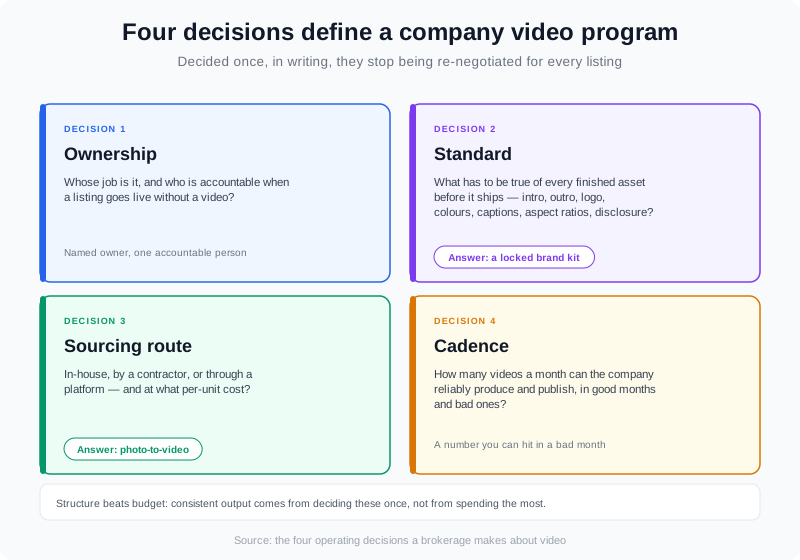
Fig 1 - Companies that decide these four once, in writing, stop re-negotiating video for every listing. The rest of this guide takes them one at a time.
Decision 1: Who Owns Video in the Organization?
Ask a brokerage where video comes from and the honest answer is often "whoever is available." That is the failure mode. The three workable models each trade control against cost, and it is worth naming which one you are running before you change anything.
| Model | How it works | What it is good at | Where it strains |
|---|---|---|---|
| Centralised in-house | One media team or coordinator produces for every agent and listing, using a shared brand kit. | Consistency and speed per listing once the team is staffed; the brand never wobbles. | Payroll and equipment are fixed costs; the team bottlenecks when several listings go live at once. |
| Distributed to agents | Agents produce their own video to a published brand standard, with templates and stock assets supplied centrally. | Scales with headcount; agents build personal brands that carry the brokerage. | Quality variance; the standard degrades under deadline unless it is enforced. |
| Outsourced | A single videographer, agency or platform handles production on a retainer or per-listing basis. | No payroll; easy to flex volume up and down from month to month. | Margins stack up over volume, and turnaround depends on someone else's calendar. |
The pattern that shows up in companies doing this well is a blend with a clear owner: one person accountable for the program, a central standard, and a sourcing route that changes with volume rather than with mood. That blend is also what lets a company survive the month three listings go live at once - which is the month every single-route model breaks.
Decision 2: What Standard Does Every Video Have to Meet?
A standard is not a style guide nobody reads. It is a short list of things that are automatically true of every asset, so the only variable left is the property. Companies that publish video at volume tend to lock five things:
- Identity - logo, colours, fonts, intro and outro cards, applied identically every time.
- Formats - the same cut rendered for each destination, so a listing video covers a website, a feed and a vertical platform without a second edit.
- Length and shape - an agreed runtime band per placement, and a decided order (exterior, then rooms, then lifestyle or context).
- Disclosure - a written rule for labelling every enhanced or altered visual, so nobody has to make that call at upload time.
- Handoff - who signs off, and what happens when a listing is photographed but never filmed.
The last point is where most programs quietly fail. If the standard assumed a shoot, a listing that only has stills breaks it. The companies that solved this wrote a second, equal path into the standard: when there is no footage, the walkthrough is built from the photo set. Tools now do that assembly automatically - VideoGuru's video studio renders a property walkthrough from the listing photos and applies effects such as virtual twilight, virtual staging or a house reveal in one pass - and the same standard then covers every listing, filmed or not. If you want the wider playbook behind that, our guide to building consistent real estate brand video content walks the identity side of it, and the real estate video marketing strategy guide covers how the standard feeds the distribution plan.
Decision 3: Which Production Route Fits Your Volume?
Once ownership and standard are set, the sourcing route is a volume problem dressed up as a creative one. This is the comparison most companies never write down.
| Route | Best when | Cost shape | Constraint to plan for |
|---|---|---|---|
| In-house media team | You publish four or more videos a month and want the brand tightly controlled. | Fixed: salaries, gear, editing time. | Capacity is capped by headcount; everyone waits on the same calendar. |
| Freelance videographer | Listings vary a lot in prestige, and you want a human eye on the hero properties. | Variable per project, quoted per shoot. | Turnaround sits with an outside calendar; per-unit cost stays high at volume. |
| AI photo-to-video platform | Most listings are photographed but not filmed, and you need predictable monthly output. | Subscription with a published per-video cost. | Best on interiors and standard listings; hero exteriors still reward a real camera. |
The middle route is not something you have to abandon to use the third. A company can shoot its two luxury listings a month and run everything else through photo-to-video, and the same video can carry both: a user's drone pass or a real-person clip is mixed into the photo-driven walkthrough rather than kept as a separate piece. That is how a footage-light program still ends up with aerials and a human voice in it. For the volume maths on the platform route, see what listing videos actually cost in 2026.
What a Video Program Costs at Each Level
The reason companies move off per-project quoting is forecasting. A shoot calendar produces a different invoice every month; a subscription produces the same one. VideoGuru's plans are published, so they can be modelled directly:
| Plan | Monthly | Annual (billed yearly) | Videos included | Max resolution | Effective cost per video* |
|---|---|---|---|---|---|
| Free | $0 | $0 | 2 / month | 720p, up to 15s, watermarked | - |
| Essential | $59/mo | $30/mo ($360/yr) | ~3 / month (~30 / year) | 1080p | $12.00 |
| Growth | $129/mo | $85/mo ($1,020/yr) | ~10 / month (100 / year) | 4K | $10.20 |
| Pro | $249/mo | $149/mo ($1,788/yr) | 25 / month (200 / year) | 4K | $8.94 |
*Annual plans with every credit used: price divided by videos included. Every paid plan also includes 20 photos per video and 40 clips per video, so a single video can draw on a full listing's worth of stills plus a handful of motion inserts. Photo-editing credits are separate and scale with the tier - 20 AI photo edits a month on Essential, 80 on Growth, 200 on Pro. Credit rollover runs three months on monthly plans and twelve months on annual ones.
For the two human routes, resist any single number. A shoot quote is built from inputs you control - shoot days, crew size, drone or specialty coverage, pre-production hours, edit hours and licensing - and substituting your own local rates into those six lines is the only honest way to compare them against a published per-video price.
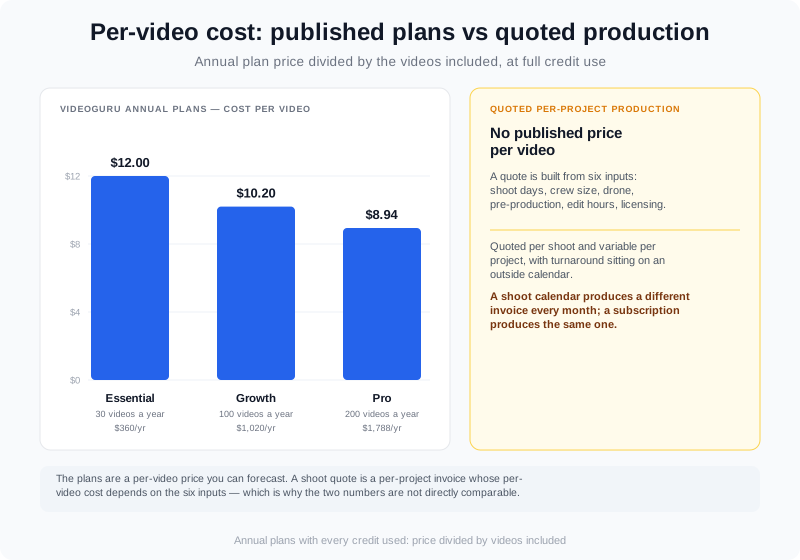
Fig 2 - A subscription converts video from a per-project invoice into a fixed line. The comparison only works when the shoot quote is broken into its inputs first.
How Companies Scale From One Video a Month to Twenty
Capacity does not come from working faster on the same video. It comes from removing the steps that do not change between listings. Three moves show up in every company that scaled:
- Templatise the parts that repeat. Intro, outro, lower-thirds, caption style and the aspect-ratio crops are the same for every listing, so they should be applied by the tool, not rebuilt by the editor - which is what a brand kit is for.
- Separate the shoot decision from the video decision. Most listings do not need a camera; they need a walkthrough. Decide per listing whether the property earns a shoot, and route the rest through photo-to-video so the calendar never has a single point of failure.
- Batch and repurpose. One listing produces a horizontal walkthrough, a vertical cut and a square feed version from the same project, so one production serves three placements instead of three productions serving one.
How one real estate media operator built the systems and team that took a one-person property-photo and video business to a sustained monthly output - the same capacity problem a brokerage runs into when it tries to standardise video across an office.
The scaling lesson in the video above is the same one a brokerage faces: at some point the bottleneck stops being skill and becomes systems. A team producing 200 videos a month is not editing faster than a solo operator - it has removed the per-video decisions. Our walkthrough of how a team covering 200 homes runs the same principle at portfolio scale.
The Consistency Problem Nobody Budgets For
Ask what breaks a video program and most people say production time. In practice it is consistency. Twenty videos from twenty agents do not read as one company, and the fix is structural rather than creative.
A locked brand kit solves the visual half - logo, colours, fonts and intro/outro applied automatically, so an agent's video and the brokerage's video are recognisably the same product. The other half is the media itself. Presenting the same listing to a social feed and to the MLS means one shoot has to yield several formats, and it means the stills and the video have to match. That is genuinely hard when photos and video are edited by different people with different tools. It gets easier when both halves run through one platform: VideoGuru's photo editing tools apply one-click virtual staging, declutter, restyle and twilight to listing stills, and the same library of effects drives the video - so the room an agent sees on the listing card matches the room in the walkthrough.
The newest piece of this is the human element. An AI avatar generated from a photo the agent uploads, paired with a clone of the agent's own voice, is composited into the property walkthrough itself - one integrated video, not a talking-head clip bolted on the end. For a brokerage that means every listing can have the same agent introduction and sign-off without anyone filming one. It is available on any paid plan (Essential, Growth or Pro); there is no separate avatar subscription, and it is not part of the free tier.
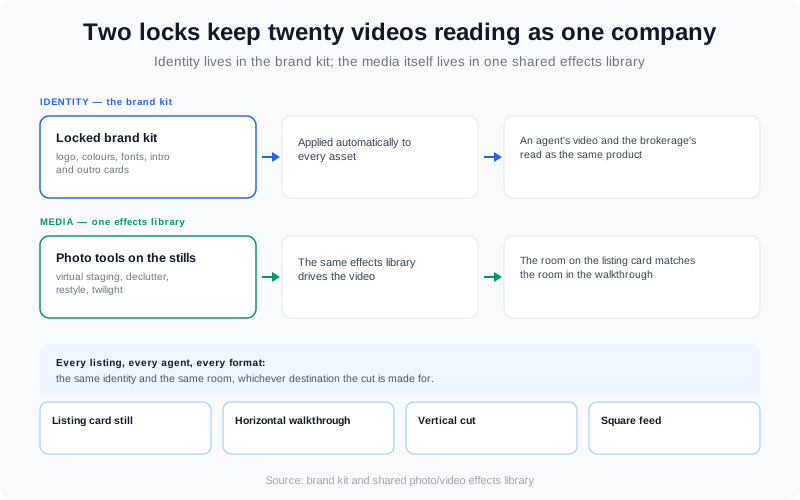
Fig 3 - Consistency is two problems wearing one coat: identity (brand kit) and media (the same effects across stills and video).
The counterweight is a disclosure rule. As AI-modified listing media has spread, portals and regulators have paid closer attention to what is altered and how it is labelled, and the honest answer has become a compliance question rather than a marketing one. NAR's research and statistics hub is the place to start when you need the industry baseline, and NAR's technology coverage tracks what brokerages are actually adopting. Industry press such as HousingWire is a reasonable early-warning feed for rule changes that affect how listing media is presented.
Frequently Asked Questions
How do real estate companies pay for video marketing?
There are three shapes. Per-project quoting pays a videographer for each listing. A retainer pays a fixed monthly fee for agreed volume, which smooths cost but caps output. A platform subscription pays a fixed monthly price for a published number of videos - VideoGuru runs from $59/mo on Essential to $249/mo on Pro, which on annual plans works out to $8.94 to $12.00 per video when every credit is used.
Should a brokerage hire an in-house videographer or outsource video?
It depends on volume and control. In-house makes sense above roughly four videos a month, where the fixed cost is spread thin enough and consistent branding matters most. Below that, outsourcing or a platform is cheaper and more flexible. Many companies blend the two: keep a shooter for hero listings and route standard listings through AI photo-to-video.
How many listing videos should an agent post each month?
Match the cadence to the listing flow, not to an ideal. One video per listing plus one brand or market-update video a month is a sustainable floor for most agents, and it is more than most competitors publish. The constraint is almost never ideas - it is whether the video exists by the time the listing goes live.
Can AI really make a listing video from photos?
Yes. Photo-to-video assembles a walkthrough from the listing photos you already have, and it also accepts your own video clips, such as a drone pass or real-person footage, mixed into the same video. On VideoGuru an AI avatar built from an uploaded photo and a clone of your voice can be composited into that walkthrough on any paid plan, with no separate avatar subscription.
Putting It All Together
Video marketing stops being unpredictable at the moment a company stops treating each video as a decision. Name the owner. Write the standard, including the no-footage path. Pick the sourcing route from your volume, not your preference. Set a cadence you can hit in a bad month. Everything else - the effects, the templates, the crops - is execution against those four, and that is the part software is genuinely good at.
Start with the listings you already have photographed but never filmed. Those are the cheapest videos a company will ever make, because the shoot already happened. You can build a walkthrough from a listing's photos here - upload the set, add a drone pass or a clip if you have one, and see the finished piece before you decide whether the standard needs a camera at all. If you are still mapping the plan behind it, our real estate content marketing guide for 2026 and our round-up of video marketing ideas for agents are the natural next reads.