

Chengran (Felix) Guan
2026-09-13 · 13 min read
Real Estate Video Brochures:
Do They Still Work in 2026?
Real estate video brochures still work in 2026 — but only the digital kind. A video brochure is a single, self-contained film that presents one listing the way a printed brochure used to: one property, one story, one clear next step. The version printed on card stock with an embedded LCD screen is a novelty whose cost rarely survives contact with a real marketing budget. The version you build from photos you already own — an AI photo-to-video walkthrough made on a platform such as VideoGuru — takes about 10 to 15 minutes and lives everywhere a printed brochure cannot: the MLS, YouTube, your email signature, and the seller's phone. If you have already shot drone footage or a real-person clip of the home, those clips can be mixed into that same walkthrough.
The format keeps earning its place because of who is actually looking at it. In NAR's 2026 Home Buyers and Sellers Generational Trends report, baby boomers accounted for roughly 42% of all home purchases — unchanged from the year before — while first-time buyers fell to about 24% of the market, the lowest share since NAR began tracking it in 1981. That buyer does not want a nine-second hook, a trending audio track, or a meme. They want a considered, complete presentation of a property, priced correctly, with the details visible. That is a brochure's job, and a video does it better than paper ever could.
Key Takeaways
- "Video brochure" means two different products. One is a printed booklet with a built-in screen; the other is a digital property film. Only the digital version scales, updates, and gets shared.
- Video brochures still convert because the buyer is older than the feed. Baby boomers bought about 42% of the homes sold in NAR's 2026 report — a full, unhurried property story speaks directly to them.
- You do not need a film crew to make one. A brochure-style video built from the professional stills you already paid for is a 10-to-15-minute job on an AI real estate media platform, not a three-day production.
- Printed LCD brochures are a novelty line item. They are quoted per project, cost several times a premium printed piece, and become obsolete the day the price changes.
- Never use a video brochure where a fast, hooky clip belongs. Brochures sell consideration; reels sell attention. They are different jobs — see the reels playbook for the attention side.
What Is a Real Estate Video Brochure? Two Meanings, One Winner
The phrase gets used for two very different products, and the confusion costs agents money every week.
The first meaning is literal: a printed brochure, usually A4 or tri-fold, with a small LCD screen, a speaker, a battery, and a USB port glued inside the cover. You open it and a video plays. Print vendors build them for real estate, automotive, and luxury retail. They are genuinely impressive in a listing presentation — and genuinely expensive, because you are buying print plus electronics plus a video edit, per copy.
The second meaning is what most people actually search for: a digital video brochure — one polished, self-contained property film that does everything a printed brochure does. It introduces the home, walks the buyer through the layout, highlights the neighborhood, states the price and terms, and ends with a call to action. It is not a social clip and not a raw walkthrough dump. It is a presentation piece, and it is the version that still works.
That distinction matters because the digital version gets you 100% of the marketing value for a fraction of the cost — and unlike a printed piece, when the price drops you cut a new version in minutes instead of reprinting 200 booklets.
Do Real Estate Video Brochures Still Work in 2026?
Yes, and the 2026 data explains why. The market has shifted toward older, better-capitalized buyers who take longer to decide. NAR's Profile of Home Buyers and Sellers — the survey the generational report is built on — has tracked the same drift for several years, and the trade press has covered the headline: boomers now dominate the buying pool while first-time buyers hit a record low.
- Boomers are the biggest buying group. Roughly 42% of purchases in NAR's 2026 generational report — a cohort that reads the whole listing and wants the full picture before a showing.
- First-time buyers are at a record low. About 24% of the market, down from roughly a third the year before — so your audience skews to people who have bought before and know what they want to see.
- Most purchases are financed. NAR put the financed share at about 74%, which means a "monthly payment" and a "terms" beat belong in the brochure, not just the headline price.
Meanwhile, the high end of the market has never been more visual. If you work listings above roughly $2M, the seller expects a presentation that matches the price of the home. A brochure-style video is the cheapest credible way to deliver that, and it doubles as the asset you send to the buyer's agent, the relocation contact, and the international inquiry — the same people a printed piece would have been mailed to, minus the postage.
Where that presentation gets seen matters too. Pew Research Center's social media fact sheet shows platform adoption is spread unevenly across age groups — which is exactly why a brochure you can host on your own site, email directly, and link from the MLS reaches buyers that a feed-first strategy quietly misses.
The honest caveat: a video brochure will not manufacture demand for an overpriced home, and it will not stop a buyer who wants a fast, emotional hook. It works when the home's story is genuinely worth 60 to 120 seconds, and when the buyer is making a considered decision.
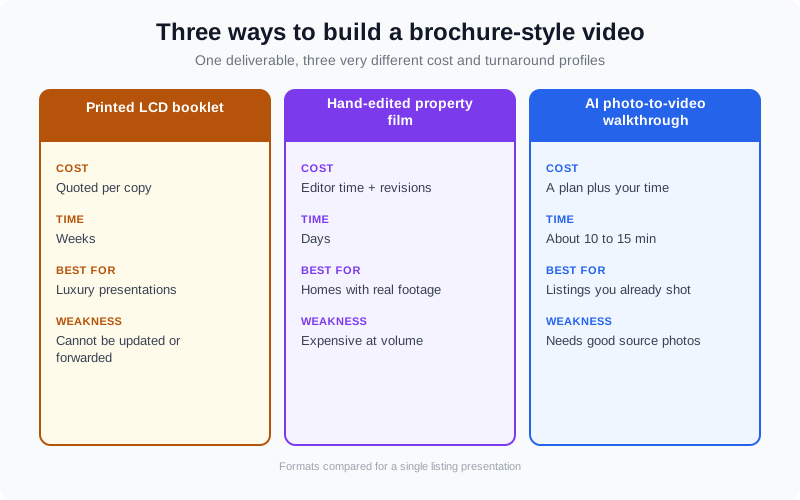
Three ways to build a brochure: printed LCD booklet, hand-edited property film, or a walkthrough assembled from the listing photos you already own.
The Three Formats Agents Actually Use
Strip away the branding and there are only three ways agents produce a brochure-style video in 2026.
| Format | Best for | Time to produce | Main weakness |
|---|---|---|---|
| Printed LCD brochure | Luxury listing presentations, luxury development sales suites | Weeks (print + electronics + video edit) | Cost per copy, cannot be updated, cannot be forwarded |
| Hand-edited property film | Homes with real footage — drone passes, a presenter, lifestyle B-roll | Days, plus editing cost and revision rounds | Expensive at volume, hard to turn around for a new listing |
| AI photo-to-video walkthrough | Standard listings where you already have professional stills | About 10 to 15 minutes per listing | Needs good source photos (you have those) |
For most agents and most listings, the third row is the pragmatic answer: you already paid for the photography, and VideoGuru's photo-to-video route turns that same photo set into a paced, branded walkthrough with captions and a soundtrack. On any paid plan you can also drop in clips you own — a drone pass, a real-person walkthrough — and add an AI avatar and a clone of your own voice inside the same video, with no separate avatar subscription. The comparison in our breakdown of real estate video makers walks through which workflow fits which kind of agent.
When a Video Brochure Beats a Standard Listing Video
A video brochure is not the same deliverable as a listing video, and using one where the other belongs wastes the asset.
Reach for the brochure format when:
- The price needs explaining. A $2M-plus listing, a unique lot, a renovation with receipts — the story is the value, and it needs more than a hook.
- You are presenting to one seller or one buyer's agent. A brochure you can hand over, email, or screen in the living room behaves like a leave-behind, and it makes you look like the agent who does more.
- The property is remote or out of state. Buyers who cannot tour this week will watch a 90-second film far more readily than they will read a spec sheet.
- You need one asset, many channels. The same film drops into the MLS-compliant link, YouTube, your website, email, and a QR code on the sign rider.
Skip it when: the home is a standard resale priced to the comps, your only goal is cold reach on Instagram, or you have no clean photos to build from. In those cases a short-form reel is the cheaper, faster tool — and if the only obstacle is footage, remember you can shoot one pass on a phone and mix it into the walkthrough rather than commissioning a full production.
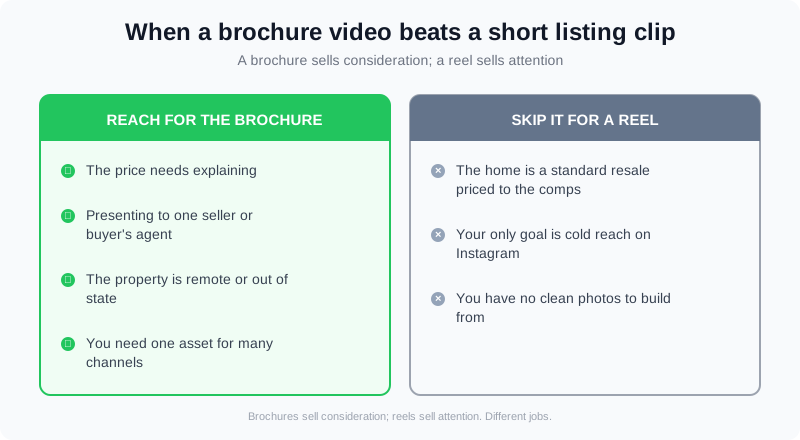
A brochure-style video earns its cost when the buyer needs context, not just attention.
How to Build a Video Brochure from Photos You Already Have
The workflow below is the one we see agents and photographers run most often, because it needs nothing new on shoot day.
- Pick the eight to twelve frames that tell the story. Exterior hero shot, entry, main living space, kitchen, primary suite, the one feature that sells the house, and a neighborhood or view frame. Skip the duplicates.
- Fix the stills first. If the photos are flat, the video will be too. VideoGuru's photo editing side handles one-click virtual staging for empty rooms, declutter, furniture swaps, and decor changes on the still images before they move into the video pipeline.
- Load them into the photo-to-video workflow. The platform sequences the frames, applies motion, times the transitions to the music, and exports a finished walkthrough — no timeline, no keyframes.
- Add the presenter layer if the listing warrants it. On any paid plan you can composite an AI avatar generated from a headshot and a clone of your own voice into the same video, so the brochure has a face and a voice without a second shoot.
- Layer in the footage you already own. Drone passes and real-person clips mix into that same walkthrough on any paid plan — one video, not two.
- Export the aspect ratios and write the description once. A 16:9 cut for the website, email, and YouTube; a vertical cut from the same project for social. Then reuse the same copy block across channels instead of rewriting it four times, as we outline in our guide to repurposing listing content.
The whole loop fits inside the time it takes to write the listing description — which is the point. A brochure that takes three days to produce gets made once, for the flagship listing. A brochure that takes twelve minutes gets made for every listing, which is when it starts moving your numbers.
What a Video Brochure Costs: Printed LCD vs. Digital
Cost is where the two meanings of "video brochure" stop being interchangeable.
Printed LCD brochures are quoted per project, not per unit at a published rate. The price scales with screen size, print finish, memory, and above all quantity — and because you are buying print plus electronics plus a bespoke video edit, a single copy lands at several times the cost of a premium printed brochure. The per-unit economics only start to work when you order in volume for a development or a luxury portfolio. Treat any single figure you see online as a starting point for a quote, not a rate card, and model it against the number of presentations you will actually give.
The digital version is priced like software, not like print. The marginal cost of the tenth brochure is close to zero, the asset can be revised the day the price changes, and it can be forwarded, embedded, and indexed by search engines and AI assistants in a way a booklet never will. If you want the exact plan tiers, the product docs cover credits and plans — the short version is that the photo-to-video pipeline and the effects are what you are buying, and the avatar and voice features ride on any paid plan rather than a separate subscription.
The practical budget rule: reserve printed LCD brochures for the two or three listings a year where the seller is also the audience for the presentation itself, and run the digital brochure on everything else.
What Every Video Brochure Should Contain
A brochure is a structured document. Treat the video the same way and it stops feeling like a slideshow.
- An opening title card: address, city, and price or price band — so a shared link is self-explanatory even on mute.
- A logical walk: approach, entry, living, kitchen, bedrooms, the feature, the grounds. Follow the path a buyer would physically take.
- Captions throughout: most views start muted, and captions also make the video readable by search engines and AI assistants.
- The numbers: beds, baths, square footage, lot size, year built, taxes or HOA where relevant — put the facts a buyer would look for on a spec sheet.
- A neighborhood beat: schools, commute, walkability, the local reason to live there. This is the part a printed brochure could never show.
- One call to action: schedule a showing, request the full disclosure packet, or call. One, not three.
Four Mistakes That Make a Video Brochure Feel Like an Ad
- Leading with your face instead of the house. Your headshot belongs at the end. Open on the property.
- Using the same photos the MLS already shows. Reorder them, add motion and captions, and stage the empty rooms so the video is not a slideshow of images the buyer already scrolled past.
- Letting it run long. Sixty to ninety seconds is the sweet spot for most homes; past two minutes you are asking for a commitment the listing has not earned.
- Ending without a next step. A brochure with no phone number is a souvenir. Say what you want the viewer to do, in words, on screen.
If you want the craft side of this — pacing, sequencing, what makes a property story land — our breakdown of real estate video content that converts covers it in depth, and building a brand on video covers how the brochure fits a longer content plan.
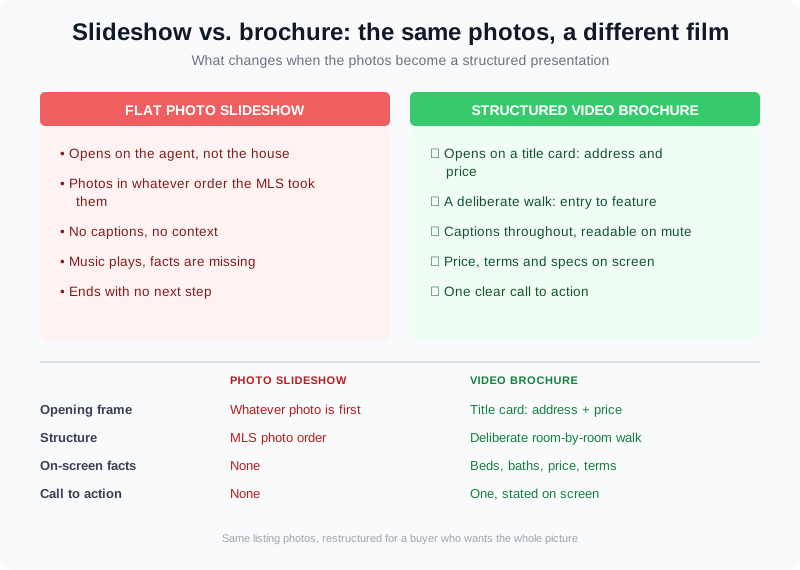
The difference between a slideshow and a brochure: a title card, room-by-room captions, the numbers, and one call to action.
Frequently Asked Questions
Do real estate video brochures still work in 2026?
Yes — the digital version does. The buying pool has shifted toward older, repeat buyers who want a complete presentation before they tour: NAR's 2026 generational report shows baby boomers at roughly 42% of purchases and first-time buyers at a record-low 24%. A 60-to-90-second brochure-style film serves that buyer far better than a short social clip. Printed LCD brochures still work as a luxury presentation gesture, but their cost per copy makes them a special-occasion tool rather than a listing-marketing default.
How much does a real estate video brochure cost?
Printed LCD brochures are quoted per project and priced by screen size, print, memory, and quantity — budget several times the cost of a premium printed brochure per unit, with the economics improving only at volume. A digital brochure is a software cost instead: a paid platform plan plus your time, with near-zero marginal cost per additional listing and no reprint when the price changes. Check the current plans for exact tiers rather than working from an old quote.
What is the difference between a video brochure and a listing video?
A listing video is about the property and lives on the listing. A video brochure is a presentation piece built to be handed over — to a seller at the listing appointment, to an out-of-state buyer, or to a buyer's agent — and it carries price, terms, and a direct call to action the way a printed brochure does. In practice the difference is structure and audience, not length: both can be 60 to 90 seconds, but the brochure assumes the viewer is already interested and wants the facts.
Can I make a video brochure without filming?
Yes. If you have professional listing photos, an AI photo-to-video platform assembles them into a paced walkthrough in about 10 to 15 minutes — no second shoot and no editing timeline required. If you do have footage, it gets better: drone passes and real-person clips mix into that same walkthrough, and on any paid plan you can add an AI avatar and a clone of your own voice inside the video. Filming is optional, not a prerequisite.
Do video brochures work for luxury or $2M+ listings?
They work best there. At $2M and above the seller expects a marketing presentation that matches the price, the buyer pool is smaller and more deliberate, and the property usually has a story — architecture, land, a renovation — that a 15-second clip cannot carry. This is also the one tier where a printed LCD brochure can be justified, because the piece itself is part of the pitch to the seller.
The Bigger Picture
The video brochure did not die — it changed format. What agents used to print, mail, and reprint is now a file that updates in minutes, travels through every channel a buyer actually uses, and costs nothing extra to make for the next listing. The agents still losing money on it are the ones buying novelty hardware for a presentation problem that software solved years ago.
Start with the listing you are presenting this week. Pull the photos you already have, build one brochure-style walkthrough, and time it end to end. If it lands under fifteen minutes, you have a format you can run on every listing instead of one flagship a year — and the version you would have printed becomes the version you can actually afford.
If the photos are the bottleneck rather than the story, start a free VideoGuru project, upload last week's listing shoot, and see what the brochure looks like before you commit to a workflow. For the wider context on where property video is heading this year, our state of AI real estate video report is the place to start.