

Chengran (Felix) Guan
2026-09-18 · 15 min read
27 Unique Real Estate Marketing Ideas You Haven't Tried
Twenty-seven real estate marketing ideas that actually generate listings, grouped by the job they do: video and visual assets, neighborhood and local plays, database and referral touches, and partnerships that borrow somebody else’s audience. Every idea below is specific enough to run this month, and none of them require a marketing budget larger than a listing shoot. The ones that produce listings fastest are the video ideas in the first group, because they can be built from the listing photos you already own rather than scheduled around a film crew.
Most “marketing ideas” lists repeat the same advice — post consistently, be authentic, add value. That is not an idea, it is a mood. What follows are concrete plays with a defined asset, a defined channel, and a defined amount of work, so you can pick a handful and actually start.
If you only take three things from this page: local beats clever, repeatable beats brilliant, and owned assets beat rented attention. The 27 ideas are organised around those three principles, and the last section shows how to run a batch of them in one afternoon instead of one-per-week forever.
Key Takeaways
- Ideas fail from friction, not from being obvious. Any tactic that needs a shoot day, a designer, or a new habit dies in a busy month. The 27 below are built to run from assets you already have.
- Video is the highest-leverage group. A walkthrough can be assembled from a listing photo set in minutes, then exported in 16:9, 1:1, and 9:16 to cover the MLS, YouTube, and social from one build.
- The database is where the referrals are. Anniversary videos, vendor introductions, and closing-day assets cost almost nothing and compound in a way that a paid ad never does.
- Pick seven, not twenty-seven. A quarter of consistency on a handful of ideas beats a week of enthusiasm across all of them.
- Budget in per-asset terms. On annual billing with every credit used, VideoGuru videos work out to about $12.00 on Essential, $10.20 on Growth, and $8.94 on Pro — so “a video for every listing” is a planning decision, not a splurge.
Why Most Marketing Ideas Fail (and What Makes One Stick)
NAR’s Real Estate in a Digital Age report shows where agents already spend their attention: roughly three in four REALTORS® use social media in their business, about half use drone photography or video, and social media is named as the top lead-generating technology, ahead of every CRM. The channel is not the problem. Production capacity is.
Three filters separate the ideas that survive a busy month from the ones that end up as notes in your phone:
- Local specificity. A video about your street beats a video about real estate. Hyper-local assets get saved, forwarded, and commented on because your farm area recognises itself in them.
- Repeatability. If the idea needs a crew, a shoot day, or a cleared calendar, it will run twice and stop. Ideas that consume assets you already produced — photos, clips, client conversations — are the ones still running next spring.
- Ownership. Rented attention disappears the day you stop paying. An email list, a testimonial page, a vendor kit, and a video library are assets you keep, and every idea below builds one.
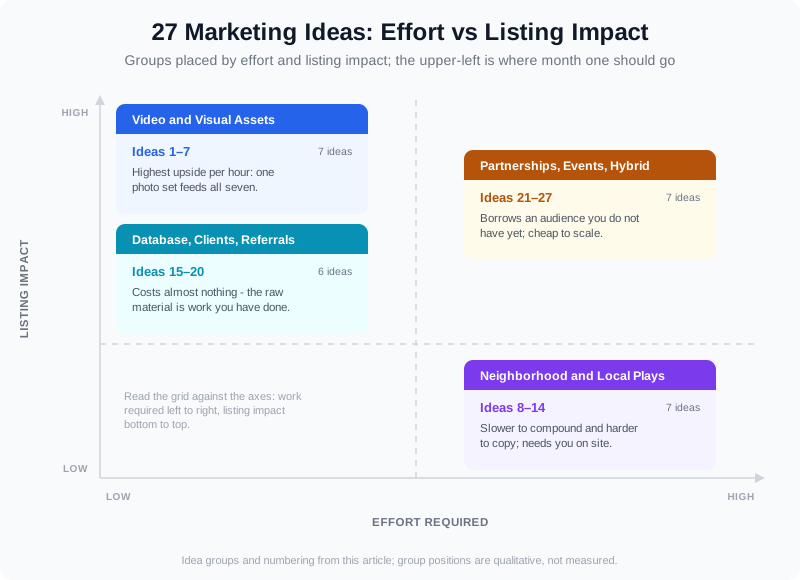
The 27 ideas plotted by effort and impact. The upper-left quadrant — high impact, low effort — is almost entirely video and database plays, and it is where the first month should go.
Ideas 1–7: Video and Visual Assets
This group carries the most upside per hour because a single listing photo set can feed all seven. It is also the group where an AI real estate media platform removes the bottleneck — no crew, no editor, no scheduling dependency.
The “Coming Soon” Teaser
Market the listing before the sign goes up. Take the seller’s existing photos, assemble a 30-second walkthrough, and post it to your farm area with a single on-screen band: “Live Friday.” You build a buyer waitlist before the first showing and give the seller a reason to sign with you instead of the agent who only promises photos.
The Room-by-Room Objection Reel
Write down the five questions you are asked at every showing — noise, parking, storage, schools, why it has sat. Then film a 20-second answer standing in the part of the property that proves the answer. One answer per room, one post per week; the playlist does your pre-qualifying for you.
The Price-Band Neighborhood Tour
Buyers do not search your name, they search a number and a place. Build one 30-second tour per price band — “what $500,000 buys on this street,” then $650,000, then $800,000 — from the same photo set. Three assets, three buyer segments, one shoot.
The Photo-to-Video Listing Pitch
Find a listing that has been sitting with weak photos, assemble a 30-second walkthrough from those same photos, and send it to the owner with one line: “this is your home, marketed properly.” It is the listing presentation that arrives before you do.
The Day-to-Night Roll
Shoot the exterior once in daylight and once at dusk, or turn the daylight frame into golden hour in the editor. Then post the two frames as a loop or a carousel. The transformation is the hook, and it is the single most shareable asset a listing produces.
The Ten-Minute Listing Video
Stop reserving video for the flagship property. If a photo set already exists, a paced walkthrough with motion, transitions, music, and voiceover is a build step, not a shoot day. Every listing gets video, and the cost per video stops being the reason it does not happen.
One Build, Three Aspect Ratios
Cut the walkthrough once and export it 16:9 for YouTube and the MLS, 1:1 for the feed, and 9:16 for reels and Shorts. One asset covers every surface you publish to, which is the difference between a video every month and a video every listing.
VideoGuru sits at the centre of this group as a photo-to-video platform: upload the listing photo set and it assembles a paced, narrated walkthrough, then exports the same build in 16:9, 1:1, and 9:16. Each video accepts up to 20 photos and up to 40 clips, so a drone pass or a real-person clip you already own can be mixed into the same walkthrough instead of living in a separate edit. The AI effects catalogue does the visual work that used to require a stager or a crew — virtual twilight, virtual staging, declutter, restyle, renovation visualisation, and seasonal changes, all applied from a single still.
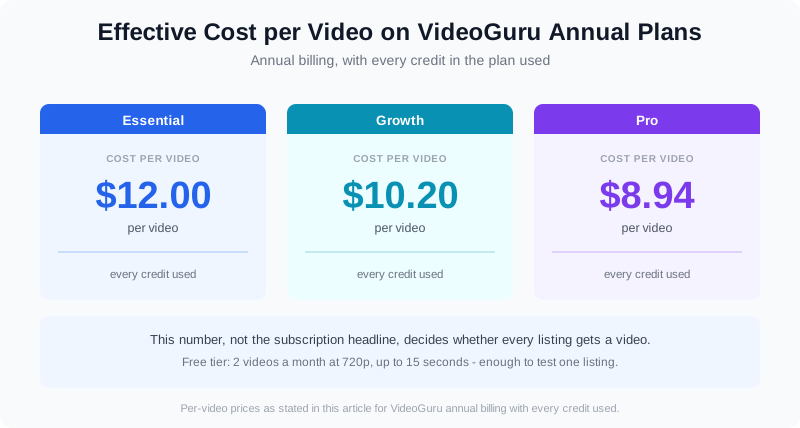
Effective cost per video on annual billing when every credit is used: $12.00 on Essential, $10.20 on Growth, $8.94 on Pro. That number, not the subscription headline, is what decides whether every listing gets a video.
Ideas 8–14: Neighborhood and Local Plays
Local plays are slower to compound and harder to copy. They work because your farm area sees itself in the content, and because almost no agent in your market is disciplined enough to run them for a full quarter.
The Street Report
A 60-second monthly email to your farm: three sold comps, one market number, one listing. No pitch. By month six people forward it, and forwarded local data is the cheapest listing appointment you will ever get.
The Just-Sold Walkthrough
Post the walkthrough of your own closed sale with the final price on screen. Future sellers do not want a promise, they want proof that your listing moved — and price-over-time is the proof.
The Three-Touch Open House Follow-Up
Same evening: a thank-you text with the walkthrough link. Next day: a neighborhood recap clip. One week later: two similar homes, still available. Most open house leads are lost between touch one and touch three.
The Community Event Recap
Sponsor or attend a local event and produce a 45-second recap with your branding in the intro and outro cards. You are not selling in it, which is exactly why people watch it to the end.
The Local Business Feature
Offer a neighborhood café, gym, or contractor a 30-second feature built from their own photos. They share it with their audience, you get introduced to a local audience that is pre-warmed to your name.
Ask the Contractor
Record short Q&A clips with your inspector, lender, and stager. Each one answers a buyer objection without a sales pitch, and each one gives you a referral partner who now owes you exposure.
The School and Commute Snapshot
Thirty seconds with drive times burned on screen — to downtown, to the interstate, to the elementary school. For out-of-area buyers this is the most-asked question about any listing, and almost nobody publishes the answer.
Two of these pair naturally with video: the street report can carry a walkthrough link, and the school-and-commute snapshot is a 30-second cut of a walkthrough you already built. For the listing-presentation angle behind idea 4, our guide to winning listings with better photos covers what sellers actually compare when they interview agents.
Ideas 15–20: Database, Past Clients, and Referrals
Every agent says their database is their business; very few give it anything to look at. These six ideas turn a contact list into a content audience, and they cost almost nothing because the raw material is work you have already done.
The Home Anniversary Video
On the anniversary of a client’s closing, send a 30-second “your home, one year later” clip with a light market context line. It is the lowest-effort touch in this list and the one most likely to produce a referral the same week.
The Closing-Day Compilation
Give buyers the video of their own home on the day they get the keys. They share it with family, and family is where the next referral comes from. You are producing an asset they own emotionally.
The Vendor Referral Kit
Build a shared folder of 15-second clips introducing the vendors you actually trust. Send it to every new client. Vendors who get introduced this way refer business back, and the kit never ages out.
The Un-Sold Circle
For clients who bought three or more years ago, send one annual “is it time?” video with a market snapshot of their street. Equity conversations convert far better when they start with data instead of a cold call.
The Testimonial System
One client per month: ask for a two-sentence review, or better, record it as a voice clip you can lay under a listing montage. A testimonial page that grows every month outperforms the three quotes you collected in your first year.
The Investor Brief
A monthly five-minute market video for your investor list — rent comps, price trends, what is trading. Investor clients transact repeatedly, and consistency is the whole product here.
If your list is thin, start with the volume play instead: our breakdown of how a solo realtor posts one video per day shows how the content habit and the follow-up habit reinforce each other, and the real estate content marketing guide maps which assets belong at each stage of the client relationship.
Ideas 21–27: Partnerships, Events, and Hybrid Plays
The last group borrows an audience you do not have yet. These are the ideas that scale fastest with a small budget, because a partner brings both the people and half the credibility.
The Monthly Listings Q&A
Go live for 20 minutes, take five questions, answer them properly. Then cut the answers into five Shorts. One sitting produces a live appearance plus a week of clips.
The Postcard QR
Print a QR code on your just-listed postcard that lands on the walkthrough, not your homepage. It turns a piece of print nobody scans into a trackable view, and it tells you which farm streets actually open your mail.
The First-Time Buyer Night
Co-host a 45-minute session with a lender, film it, and cut three clips. You split the advertising cost, double the audience, and end up with content that answers the questions first-time buyers search for.
The Video Pitch to Local Media
Send a 15-second video pitch to a local podcast or news segment: one statistic, one contrarian take. Producers need guests weekly; a video pitch is harder to ignore than an email and it positions you as the local expert.
The Luxury Listing Brochure
For the $2M+ tier, build a QR-linked microsite with the walkthrough, the floor plan, and a neighborhood clip. Luxury marketing is judged on presentation, and a single link that holds everything reads as a professional operation.
The Cross-Market Referral Swap
Partner with an agent in another market and each produce a 60-second “what your buyers get when they move here” video. Relocation referrals are otherwise left to chance; this makes the introduction an asset they can forward.
The Year in Listings
In December, cut every sale, every client, and every street into one 90-second recap. Send it to your top fifty contacts as a thank-you rather than a pitch. It is the one piece of content you can resend every January.
When you advertise any of these — a sponsored event, a co-marketing post, a direct mail piece — keep the language factual and the claims verifiable. The FTC’s advertising guidance is the standard for claims, and the Fair Housing Act overview at HUD is the reference to check before any ad describes the “ideal” buyer or the neighborhood. Both links belong in your bookmarks if you publish marketing weekly.
How to Run a Batch of These Without Adding a Week to Your Month
The reason these lists stay aspirational is that they are treated as 27 separate projects. They are not. Group them by asset source and most of the work collapses into a single afternoon.
| Asset source | Ideas it feeds | What the work actually is |
|---|---|---|
| One listing photo set | 1, 4, 6, 7, 14 | One walkthrough build, then export three aspect ratios and cut two verticals from it |
| One hour on site with a phone | 2, 5, 12, 13 | Objection answers, the dusk exterior, the local business feature, the contractor Q&A |
| Your existing client list | 15, 16, 17, 18, 19, 20 | One email or video per month per segment; no production, just sending |
| A partner or local event | 8, 9, 11, 21, 23, 24, 26 | A shared calendar slot and a 45-second recap cut from footage everyone already shot |
| Print and QR | 22, 25, 27 | A link and a code; the landing asset is the walkthrough you already published |
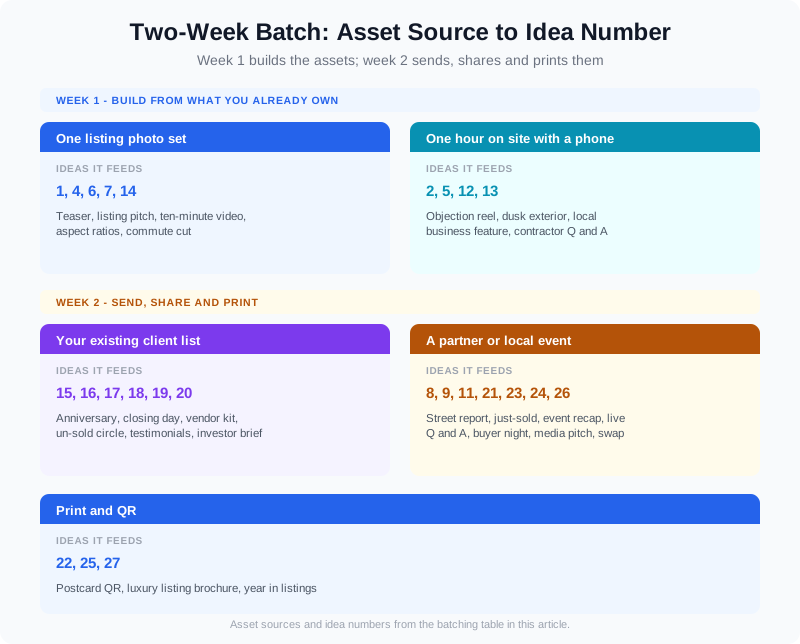
Two weeks, five asset sources. Batching by source removes the scheduling problem that kills most of these ideas before the third week.
A practical first pass: block two hours. Pull one listing photo set and build the walkthrough. Export it three ways. Cut a vertical teaser and a vertical comparison clip from the same build. Write the street report email while the render runs. That is five of the 27 ideas in a single sitting, and four of them are reusable on every future listing.
A note on production capacity: if you are already outsourcing editing, the constraint is rarely talent, it is turnaround per listing. Platforms like VideoGuru exist to collapse that step — the free tier produces 2 videos a month at 720p up to 15 seconds, which is enough to test the workflow on one listing before committing; current plan detail lives in the product docs and you can start in the VideoGuru workspace.
Which Numbers Tell You an Idea Worked
Marketing ideas get abandoned because nobody checks whether they worked. Four numbers are enough:
- Inbound conversations attributable to the asset. Ask at the door and in the first reply: “where did you see the listing?” That single question beats most analytics.
- Saves, shares, and forwards. Local data and street-level video get forwarded; generic tips do not. If a piece is being shared, make more of that format.
- Listing appointments from your farm area. Track appointments, not impressions. Community-event recaps and street reports should show up here within a quarter.
- Cost per delivered asset. Compare what you spend per video or per piece against the outcomes above. On annual billing with every credit used, VideoGuru lands around $12.00 on Essential, $10.20 on Growth, and $8.94 on Pro per video — a number you can hold next to a videographer quote without guessing.
Our real estate video analytics guide goes deeper on retention and channel-level reporting if you want a weekly dashboard rather than four gut-check numbers.
Frequently Asked Questions
What type of content actually attracts more clients for a real estate agent?
Local proof beats generic advice, every time. The content that converts in this market is specific to your farm area and shows evidence: a street report with sold comps, a walkthrough of a listing you actually marketed, a price-band tour of a neighborhood you work weekly, a client testimonial recorded on the property. Buyers and sellers respond to content that answers a question they can act on this week. Broad “market update” content from a national perspective is easy to produce and easy to ignore, because it does not tell anyone what their street is doing.
How do you market a listing that is not getting showings?
Change the asset before you change the price. Rebuild the visual presentation with better photos and a walkthrough, add a day-to-night exterior and a staged version of the emptiest room, then re-launch it to the buyers who already saw it with a reason to look again — a new price band, a new open house time, or a neighborhood clip that answers the objection the old listing ignored. In most cases the listing is not overpriced in the market’s mind; it is unread, because the presentation never got a second look.
How much should an agent spend on marketing per listing?
Work backwards from the asset, not the budget. A photo shoot plus a walkthrough, one set of social cutdowns, a printed piece with a QR to the video, and one open house follow-up sequence is the whole stack a typical listing needs. Video is the line item that used to dominate, and it no longer has to: on annual billing with every credit used, VideoGuru video works out to roughly $12.00 on Essential, $10.20 on Growth, and $8.94 on Pro, so you can price “a video for every listing” instead of reserving it for the flagship. Keep the spend per listing proportional to the commission at stake and audit it quarterly.
Can I run these ideas without filming anything?
Yes, for most of them. A listing photo set is enough input to assemble a paced walkthrough with motion, transitions, music, and voiceover, which covers the video ideas in the first group. You can also mix in clips you already own — a drone pass or a real-person clip — because the platform accepts photos and video clips in the same project. Filming is optional, not required. The ideas in the local and partnership groups do need you on site for a few minutes, which is a scheduling question rather than a production one.
How many of these ideas should an agent run at once?
Seven. One video format, one neighborhood play, one database touch, one partnership, one event or live slot, one print or QR piece, and one recurring email. That mix covers discovery, proof, and follow-up without crowding out listing appointments, which is the actual job. Run it for a quarter before adding anything, then add the next idea from whichever group produced the most inbound conversations.
Where to Start: Pick Seven, Not Twenty-Seven
The agents who get listings out of a list like this are not running all 27. They picked a video format they can produce from a photo set, one neighborhood play they can repeat monthly, one database touch they can automate, and one partnership they can co-host. Everything else waits.
Start with the asset you already own. Pull the photo set from your last three listings, build one walkthrough, and export it three ways. Post the vertical, send the horizontal to your database with a one-line note, and add a QR to the next printed piece you order. That is ideas 1, 6, and 7 running today, and the rest of the list becomes a menu you draw from instead of a project you never start.