

Chengran (Felix) Guan
2026-08-24 · 8 min read
AI Real Estate Media Platforms:
The Complete 2026 Landscape
An AI real estate media platform is a single tool that creates, edits, and delivers the visual content a listing needs — video walkthroughs, edited photos, virtual staging, and social clips. In 2026, this category became one of the fastest-moving parts of real estate technology. Major AI video companies launched real-estate-specific editions, photo editing moved from per-image tasks to full-shoot automation, and agents and photographers started consolidating their tool stacks instead of juggling separate subscriptions. This guide maps the landscape, explains what each category does, and shows you how to choose the platform that fits your workflow.
Key Takeaways
- AI real estate media platforms combine video editing, photo enhancement, and virtual staging in one workflow — that is what separates them from single-purpose tools.
- Four categories dominate the landscape: AI video editors, AI photo editors, staging and visualization tools, and all-in-one media platforms.
- Agents use them to publish listing content faster; photographers and media companies use them to scale production without hiring.
- The 2026 shift: general AI video platforms are building real-estate editions, while all-in-one platforms consolidate photo, video, and staging into a single system.
- Evaluate on five things: turnaround time, output quality, brand consistency, MLS compliance, and cost per delivered asset.
What Is an AI Real Estate Media Platform?
An AI real estate media platform is software that produces listing-ready media with artificial intelligence doing the heavy lifting. You upload raw footage or photos, and the platform edits the video, corrects the photos, stages empty rooms, and exports everything in formats that meet MLS and portal requirements.
The term matters because it describes a shift in how real estate media gets made. A decade ago, an agent hired a photographer for stills, a videographer for tours, and a stager for vacant homes — three vendors, three schedules, three invoices. Platforms collapse that pipeline. Instead of coordinating outside help, you upload the source material once and the platform handles editing, enhancement, and formatting.
The distinction from older software is automation. Traditional editors are tools you drive manually, step by step. AI platforms make decisions for you: they detect the best frames, balance exposure across a shoot, remove clutter, and assemble a cut that follows a proven real estate structure. Your job becomes reviewing and approving, not rebuilding every clip.
The Four Categories of AI Real Estate Media Tools
The 2026 landscape splits into four categories. Understanding them helps you see what an all-in-one platform actually replaces.
| Category | What it does | Best for |
|---|---|---|
| AI video editing platforms | Turn raw footage or listing photos into edited walkthroughs with effects, music, captions, and branded intros. | Agents, videographers, media companies |
| AI photo editing tools | Correct exposure and color, remove clutter, replace skies, and batch-process an entire shoot. | Photographers, agents shooting their own photos |
| Virtual staging and visualization | Furnish empty rooms, preview renovations, and add twilight or decor changes to listing photos. | Agents, staging companies, investors |
| All-in-one media platforms | Combine video editing, photo editing, and staging in one system with brand kits and batch output. | Teams, photographers scaling up, agents who want one workflow |
Single-purpose tools still win on depth. If you only need HDR photo correction, a dedicated editor is fast and cheap. But every extra tool adds a subscription, a learning curve, and a handoff. That is why the all-in-one category is growing fastest in 2026.
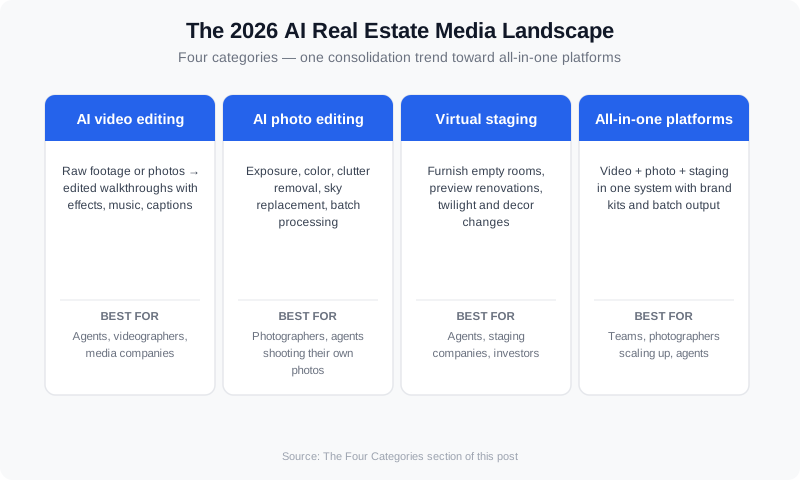
The 2026 AI real estate media landscape: four categories, one consolidation trend.
Why the Landscape Shifted in 2026
Two forces reshaped the market this year. First, general-purpose AI video companies noticed that real estate is one of the highest-volume, most repetitive video workloads in the world — every listing needs a tour, and agents need dozens per month. In August 2026, one of the largest AI video platforms launched a real-estate-specific edition aimed squarely at agents, promising market updates, listing spotlights, and home tours without manual editing. That move validated what photographer- and agent-focused tools had been building for two years.
Second, buyers and sellers now expect video on every listing. The National Association of REALTORS tracks technology adoption and listing presentation trends through its research and statistics hub, and portal data from Realtor.com research consistently shows listings with richer media attract more attention. Housing market fundamentals — tracked by the U.S. Census new residential sales data — keep inventory moving, and every new listing is a fresh deadline for media.
The result is a market where speed wins. Agents who used to wait days for a video now publish the same day. Photographers who capped out at a handful of videos per week now deliver dozens. The platforms that survive this year are the ones that remove bottlenecks, not the ones that add features nobody uses. For a deeper look at where these trends are heading, see our breakdown of AI in real estate marketing in 2026.
Watch: how AI media platforms fit into a real estate marketing workflow.
What AI Media Platforms Do for Agents
For agents, the value is turnaround and consistency. A platform can turn a set of listing photos into a video walkthrough in minutes — the same workflow we document in how to create listing videos in under 10 minutes. That speed changes what you can promise a seller: same-day video is a different conversation than next-week video.
Consistency matters just as much. Brand kits keep your intro, colors, fonts, and logo identical across every listing, which compounds into recognition — the same reason our real estate video marketing strategy guide stresses repeatable formats over one-off productions. And because one platform outputs video, photos, and social crops, a single upload feeds your entire repurposing workflow.
Disclosure is part of the job too. AI-generated staging and enhancements are now regulated in many markets, and platforms that handle compliance flags save you from a costly mistake. Our guide to AI photo disclosure rules in 2026 covers what agents and photographers must disclose.
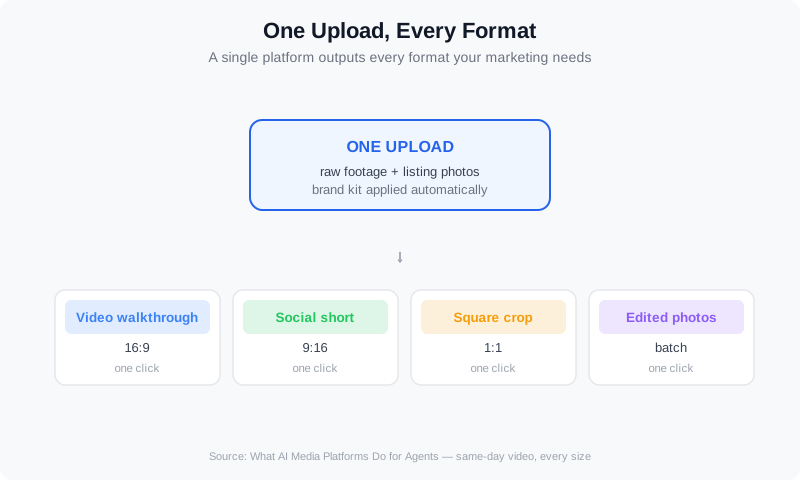
One upload, every format: video, photos, and social crops from a single platform.
What AI Media Platforms Do for Photographers and Media Companies
Photographers face a different bottleneck: production capacity. The shoot is only half the job — editing is where hours disappear. Platforms that automate photo editing and video assembly let you take on more clients without adding staff, which is exactly how one photographer we profiled went from a handful of videos to 50 per week in this case study.
The revenue angle is equally clear. When editing cost per asset drops, adding video to a photo package becomes profitable — the same math behind doubling per-client revenue with photo and video packages. Media companies take it further by standardizing batch production, the model we examined in how a media company automated 200 videos per month.
Beyond video, the same AI that edits your walkthroughs handles your listing photography — one-click virtual staging for stills, declutter, furniture swaps, and decor changes. That means a photographer can offer photo editing, virtual staging, and video from a single platform instead of three vendors. If you are pricing these services, our guide to photo editing pricing models helps you structure the offer.
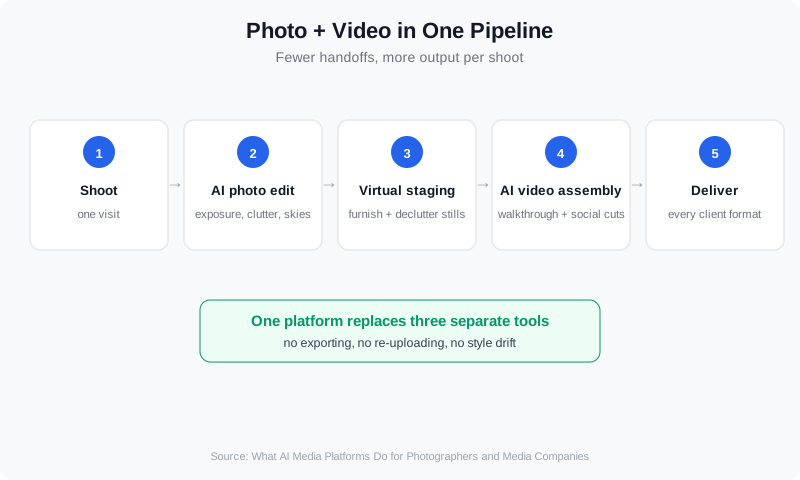
Photo editing, staging, and video in one pipeline: fewer handoffs, more output.
How to Evaluate an AI Real Estate Media Platform
With dozens of tools on the market, use the same checklist you would use to hire a media vendor:
- Turnaround: how long from upload to finished asset? Can it handle a same-day listing?
- Output quality: does the video look shot by a human crew, or does it have telltale AI artifacts?
- Brand consistency: can you apply your logo, colors, and intro across every output?
- Compliance: does the platform flag or handle virtual staging and enhancement disclosures?
- Cost per delivered asset: compare the monthly price against what you would pay a freelancer per video.
Our comparison of the best AI video editors for real estate walks through the feature differences in detail, and our cost breakdown of DIY versus AI alternatives shows how the numbers play out at different volumes.
Single-Purpose Tools vs All-in-One Platforms: What to Look For
| Capability | Single-purpose tool | All-in-one platform |
|---|---|---|
| Video editing | Deep feature set for one job | Automated cuts with templates |
| Photo editing | Best-in-class correction | Batch enhancement included |
| Virtual staging | Separate subscription | Built into the workflow |
| Brand kit | Manual setup each time | Applied automatically |
| Cost model | Several subscriptions add up | One price, one workflow |
The right answer depends on volume. An agent producing two videos a month can get by with a free or low-cost single-purpose editor. A photographer or team producing twenty listings a month will save more time and money on an all-in-one platform than on any individual tool.
Frequently Asked Questions
What is the best AI real estate media platform in 2026?
The best platform depends on your role and volume. Agents who need same-day listing videos benefit most from platforms with automated templates and brand kits. Photographers and media companies benefit most from platforms that batch-process photos and videos together. Evaluate any platform against turnaround, output quality, brand consistency, MLS compliance, and cost per delivered asset rather than chasing a single winner.
Can an AI real estate media platform replace a photographer or videographer?
Not entirely — and it is not trying to. Platforms automate the editing, enhancement, and formatting stages, which is where most of the time goes. Capturing the property still requires someone on site with a camera. The practical effect is that a photographer or videographer can deliver more listings per week without hiring editors, and agents can produce basic video themselves while saving professional crews for the listings that justify them.
How much do AI real estate media platforms cost?
Pricing varies by category and volume. Single-purpose tools typically charge a flat monthly subscription, while all-in-one platforms often price by usage or by output volume. The useful comparison is cost per delivered asset: divide your monthly cost by the number of videos and photo sets you produce. For most agents, that number lands well below the price of a single freelancer-edited video, which is why the category keeps growing.
Ready to see what an all-in-one AI real estate media platform can do for your listings? VideoGuru combines AI video editing, photo enhancement, and virtual staging in one workflow — so you can deliver complete listing media without juggling tools. Start for free at VideoGuru.
The Bigger Picture
The 2026 media platform landscape is consolidating around one idea: real estate media should be produced in a single, automated pipeline. The general AI video giants entering the space confirm the demand; the all-in-one platforms answer it. For agents, photographers, and media companies, the strategic move is the same — pick a platform that covers your whole workflow, learn it once, and let automation absorb the volume. The tools that win this year will be judged by one metric: how many listings they help you get live, and how fast.